Linux · Rust · open source

Your idea.
On your machine.

Sonix is a DAW for Linux. It records from the microphone, arranges on the timeline, mixes with real meters and exports what you hear. The audio engine runs on cpal and ALSA, projects are saved to disk, and nothing leaves your machine unless you connect an AI service yourself.

✦ The binary is the last published release (v0.9.0); master is at 0.9.149 — build from source for the newest.
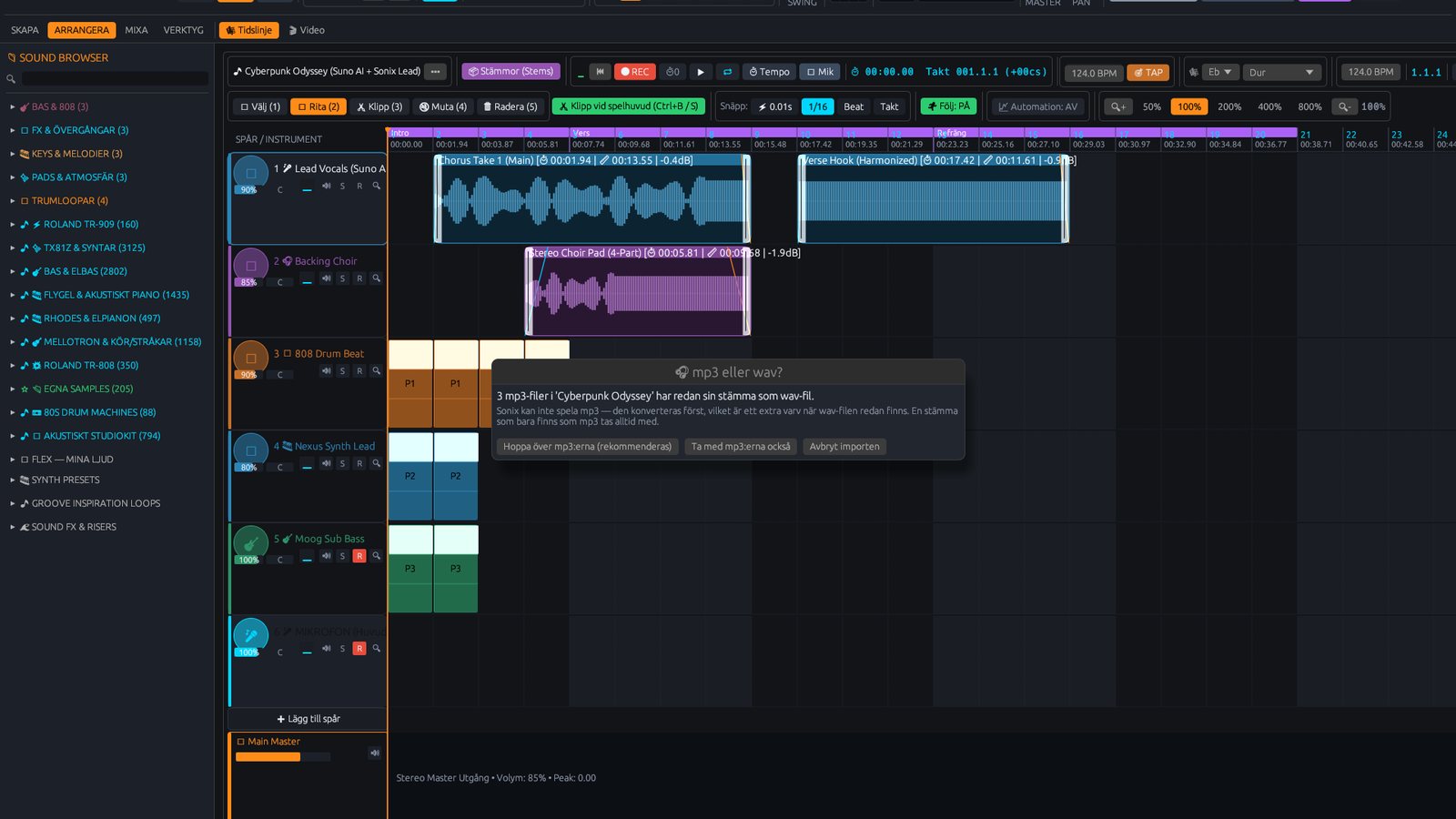
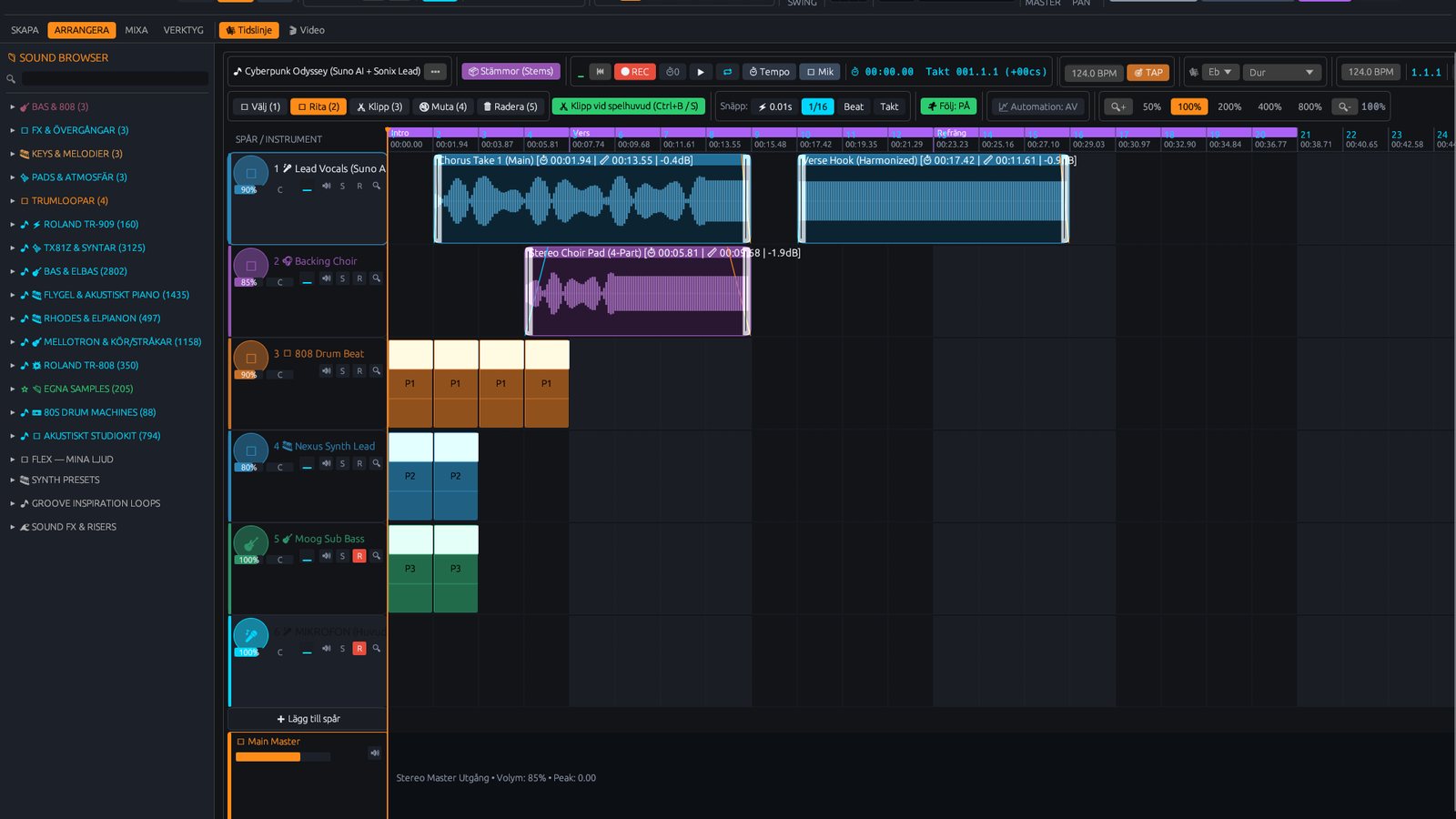
SONIX STUDIO / TIMELINE● REAL SCREENSHOT
Sonix Studio with the timeline, colour-coded tracks and waveforms
120.0BPM
04TRACKS + MIC
01 / Download

Three ways in.
Take the one that fits.

The ready-made binary needs neither Rust nor a build step. If you want the newest code, build from source; it takes a few minutes.

FASTEST

Ready-made binary

x86-64, glibc 2.35 or newer. Unpack and run. The archive has the binary, the manual, the changelog, the licences and a sha256 checksum.

curl -LO https://github.com/alexwest1981/sonix/releases/download/v0.9.0/sonix-0.9.0-x86_64-unknown-linux-gnu.tar.gz
sha256sum -c sonix-0.9.0-x86_64-unknown-linux-gnu.tar.gz.sha256
tar xzf sonix-0.9.0-x86_64-unknown-linux-gnu.tar.gz
./sonix
All releases on GitHub ↗
NEWEST CODE

Guided installer

Asks for a language, checks dependencies, builds with Cargo and adds a launcher to the application menu.

bash <(curl -fsSL https://raw.githubusercontent.com/alexwest1981/sonix/master/install.sh)

If you already have a clone, bash install.sh in that folder is enough. After changing the code: bash install.sh --refresh.

What you need

  • 64-bit Linux with PipeWire, JACK or ALSA running. PipeWire works through its ALSA layer.
  • To build it yourself: Rust stable (edition 2024) and a C toolchain.
  • For Windows VST plugins: yabridge and Wine.
  • unzip is only needed by the Suno import.

The release is from 11 September 2026. Since then master has gained microtonal tunings, a modulation matrix, a groove pool and four stretch modes, among other things. They are in the source, not in the binary. To try them, run the installer alongside it.

02 / What it does

What works.
And nothing that pretends to.

Every line here connects to the audio engine or the project state. The details come from the app's own status list.

01

Multitrack timeline

Drag a clip's edges to extend, loop or trim it. The slice tool cuts, automation draws curves, and markers split the song into sections.

VOCALS
DRUMS
02
◒

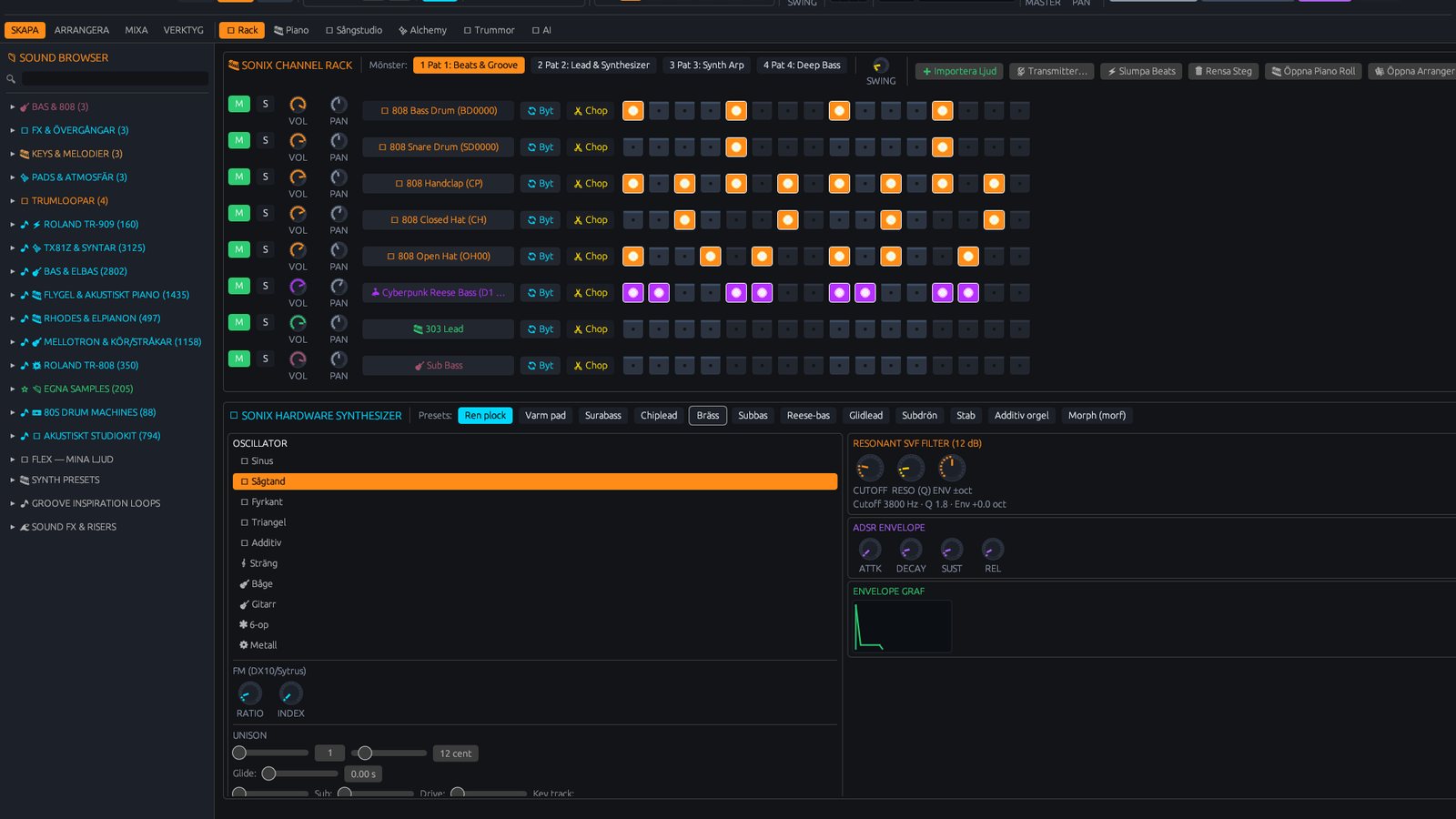
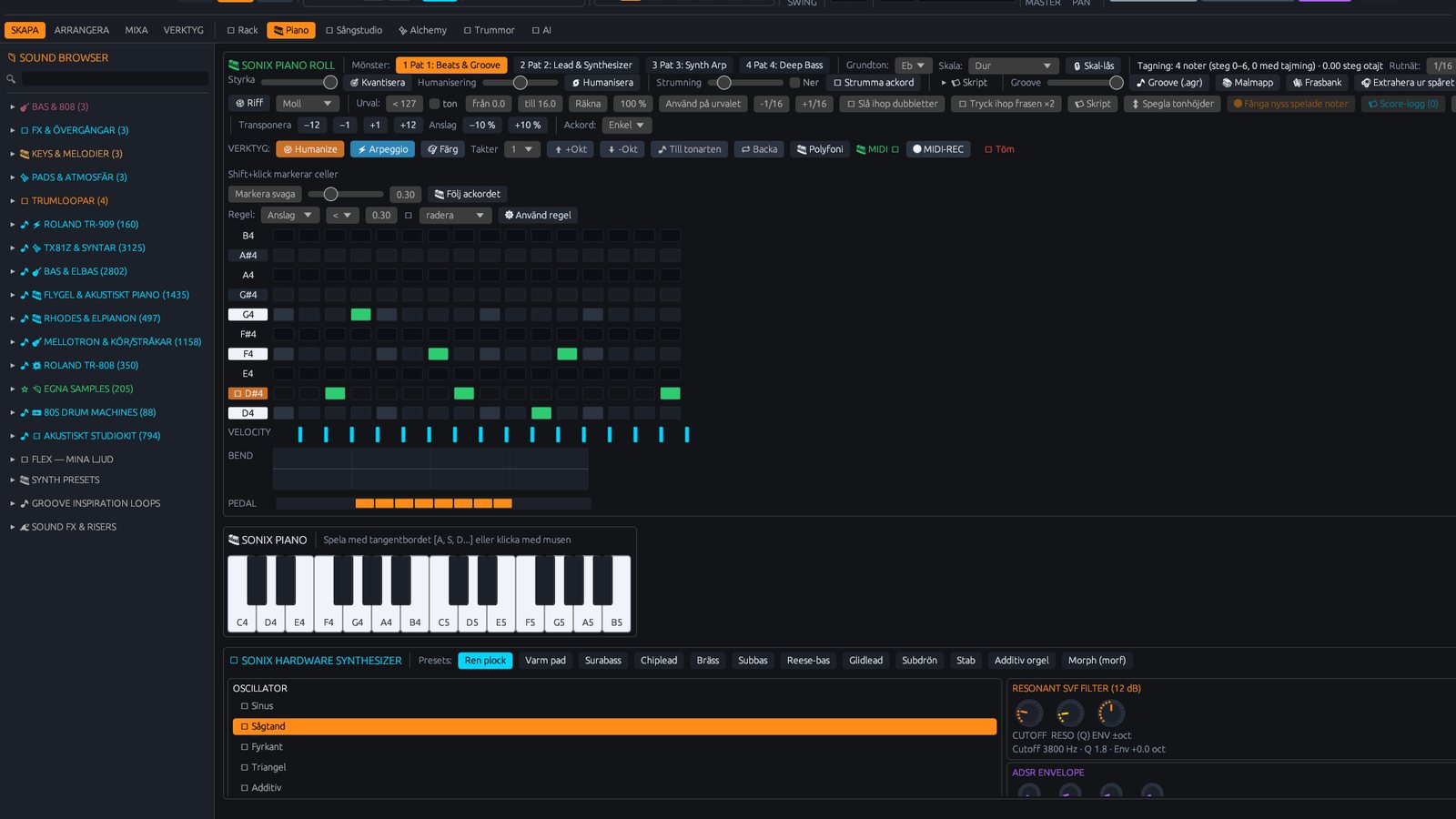
Channel rack and piano roll

A 16-step sequencer with its own channels, and a piano roll with note lengths, velocity, scales and recording from a MIDI keyboard.

03
≡

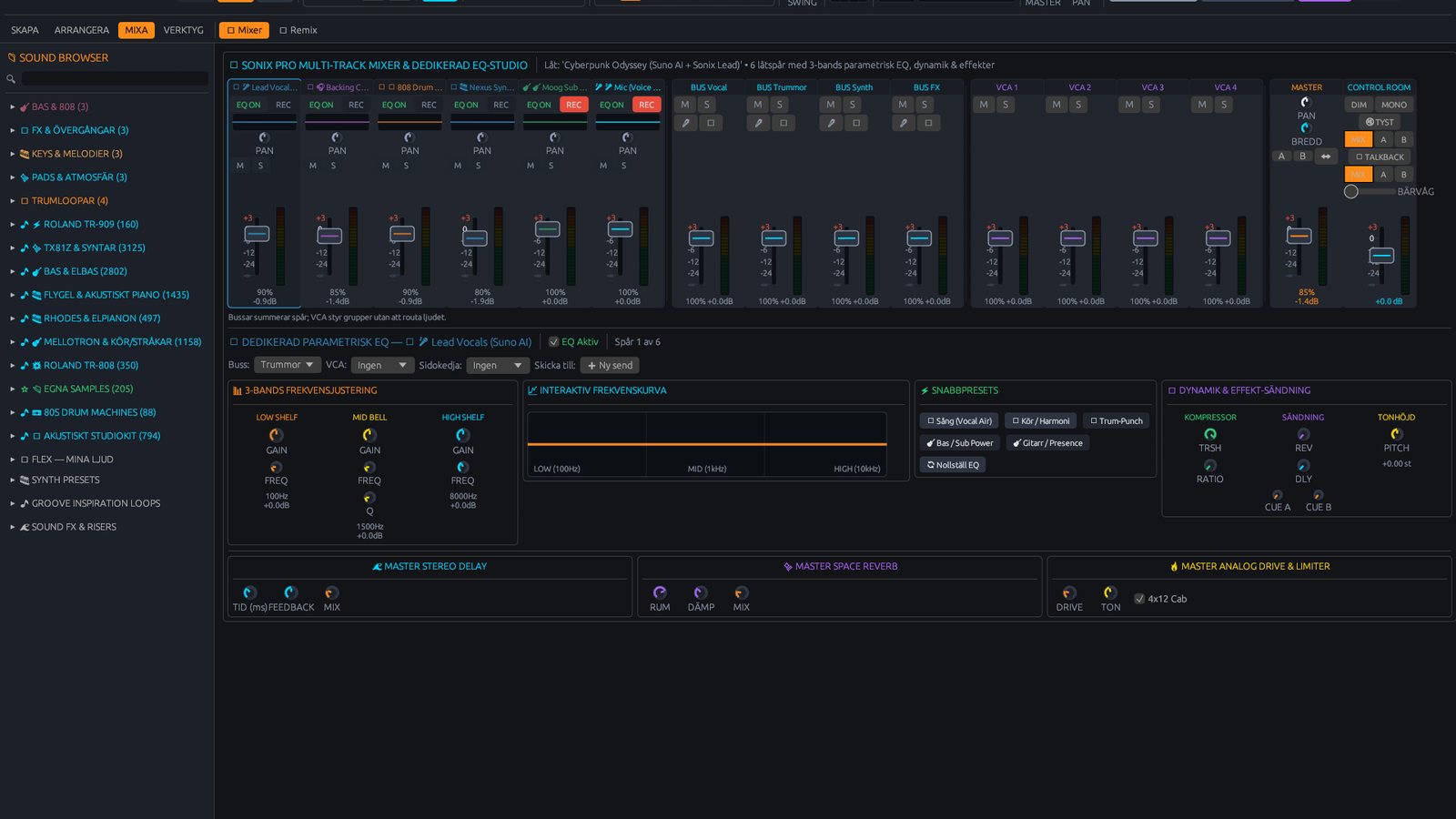
Mixer with real meters

Faders, peak meters, solo, mute, pan and width per track, plus buses, sends and a master chain.

04
◉

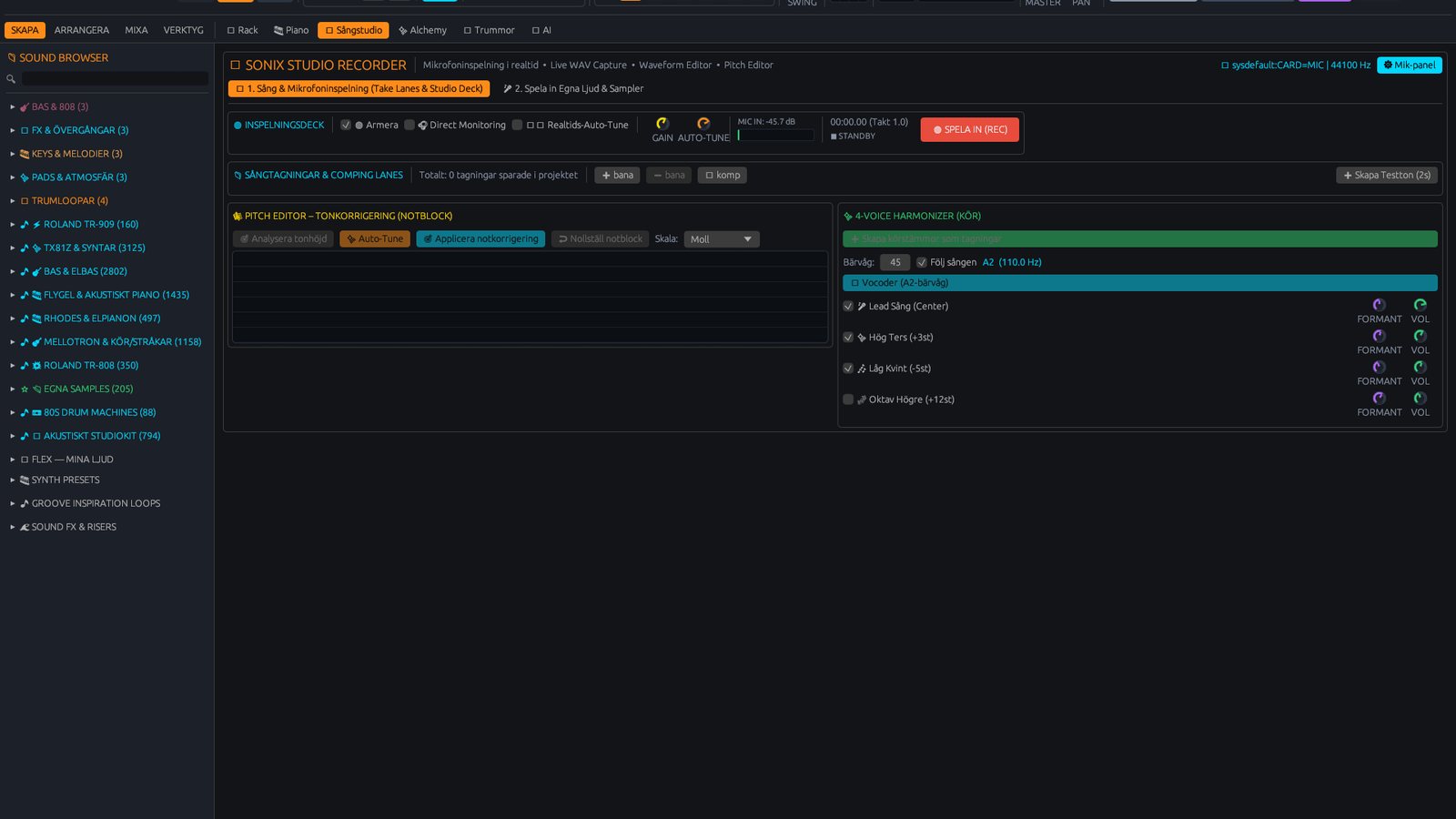
Vocal Studio

Several takes per track, comping and a harmonizer. Pitch editing runs offline on the recorded file, so what you hear is what gets saved.

05
⌁

Stem separation

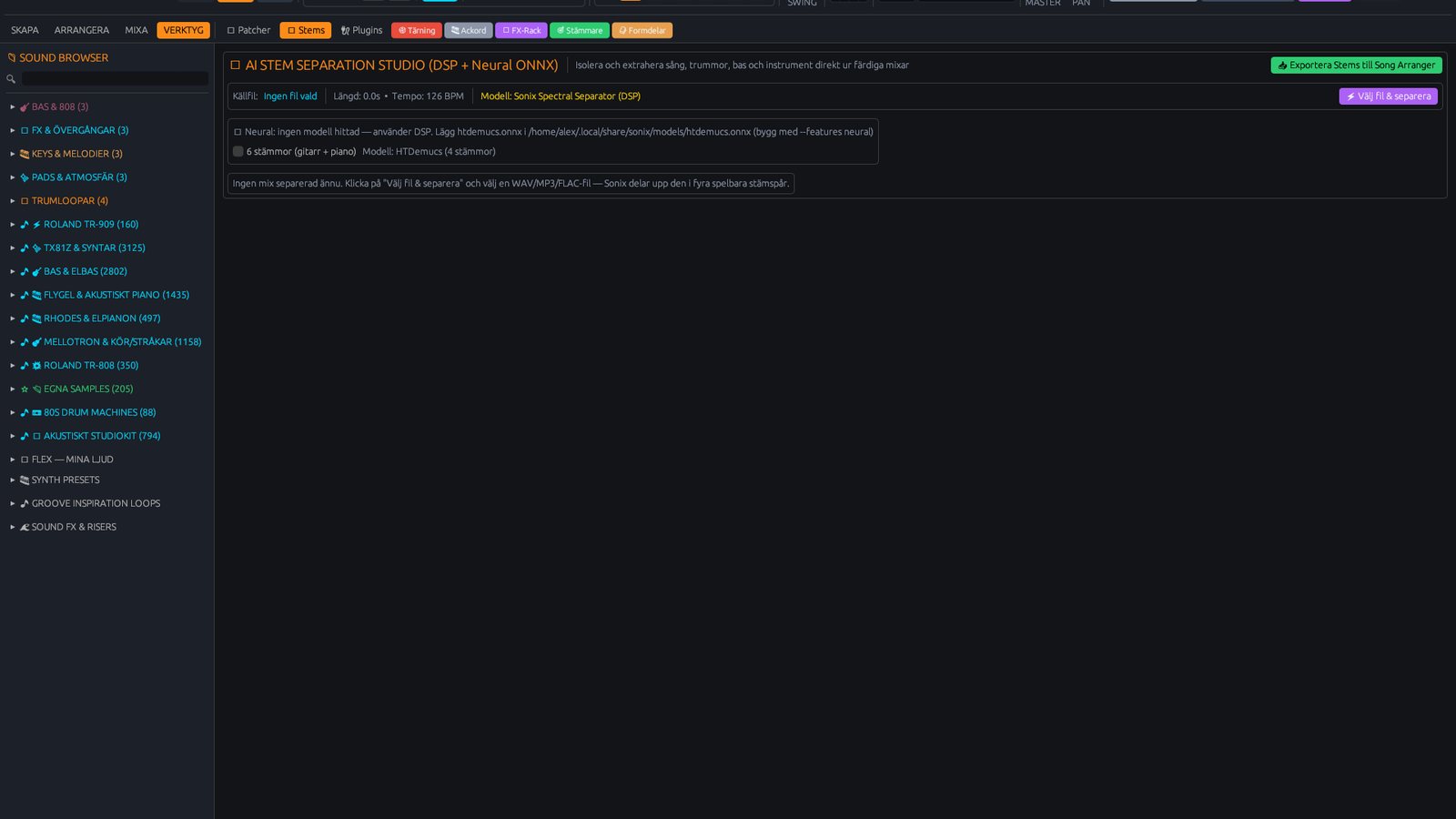
Split a mix into vocals, drums, bass and other with DSP in the standard build. The neural path is opt-in and downloads its model first.

06

Open files, open licences

Rust and egui, MIT or Apache-2.0. No account, no subscription, no telemetry. Seven interface languages, switched live, all complete.

See the code ↗
03 / Screenshots

This is how it looks.
Unedited.

The images come from the app itself. All 38 are in the screenshots folder.

Timeline and arranger with colour-coded tracks and waveforms
Timeline: colour-coded tracks, clips and real waveforms.
The channel rack with 16 steps
Channel rack: 16 steps per bar, one channel per sound.
The piano roll with notes, velocity and scales
Piano roll: note lengths, velocity per step and scales that keep the key.
Vocal Studio with several takes
Vocal Studio: several takes, comping without throwing anything away.
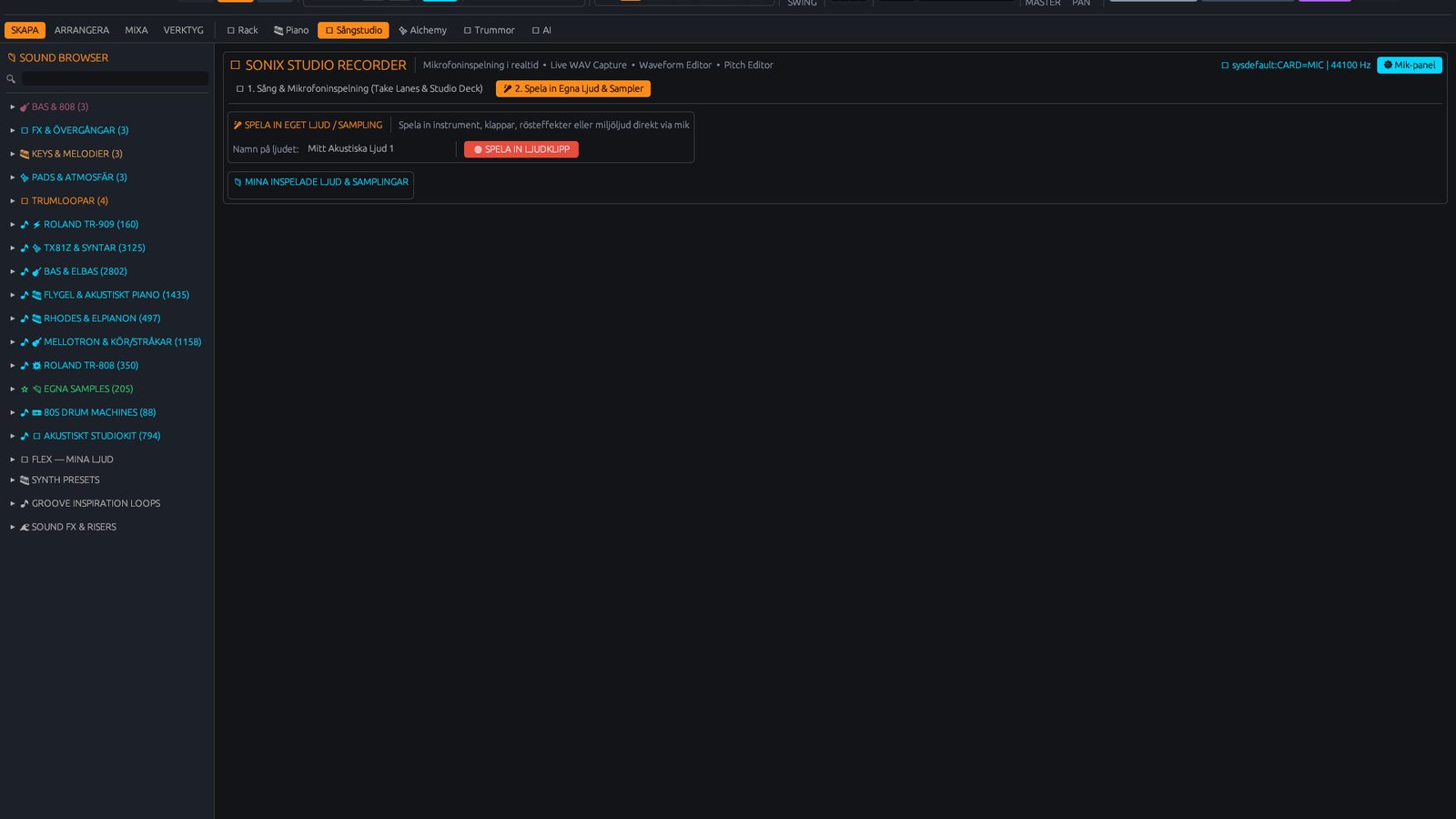
Vocal Studio sampler recording
Vocal Studio sampler: record a sound and map it as an instrument.
The mixer with channel strips and peak meters
The mixer: channel strips, meters, EQ and sends.
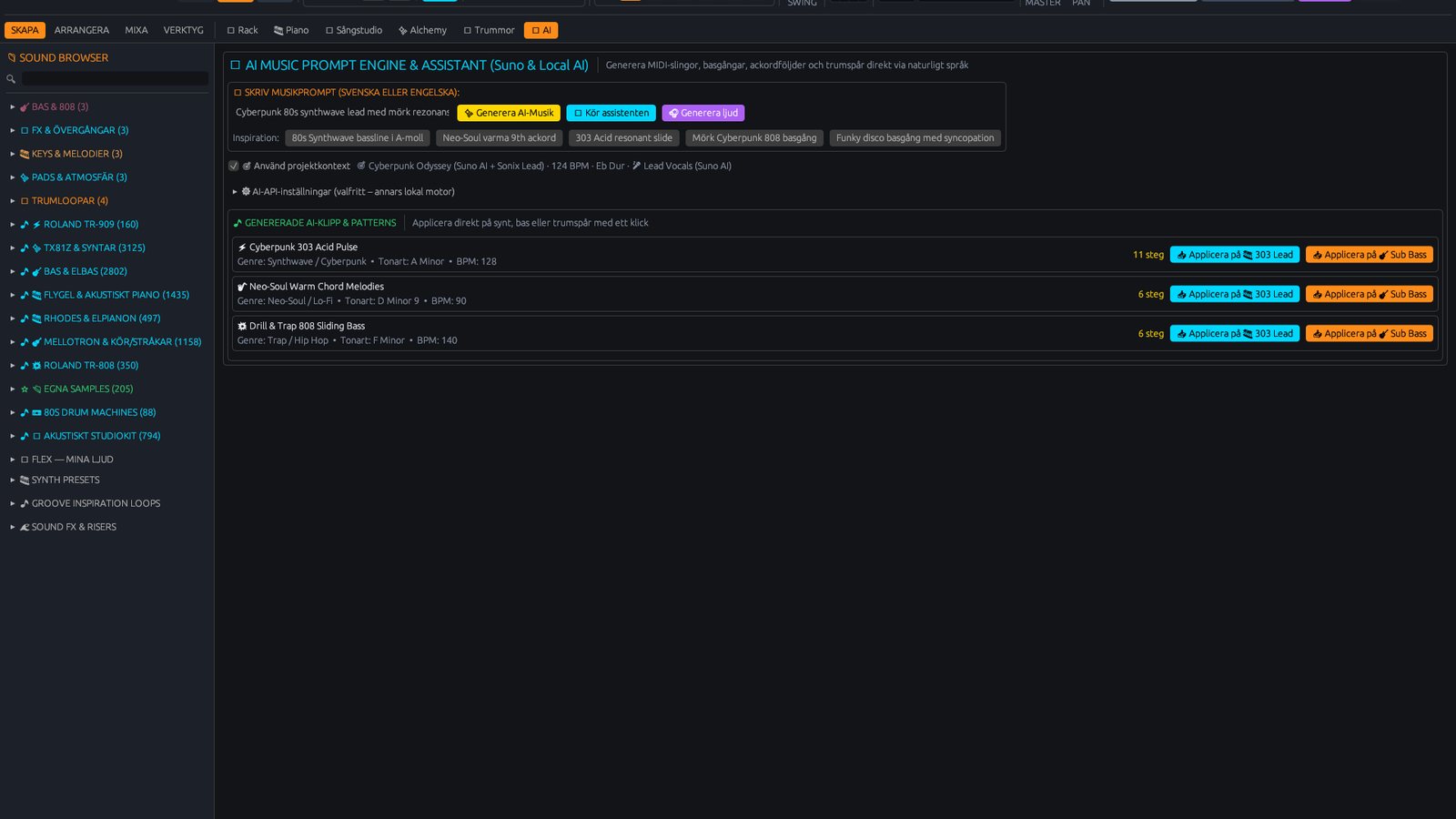
The AI music assistant
The assistant writes patterns through commands, with the project key and tempo in context.
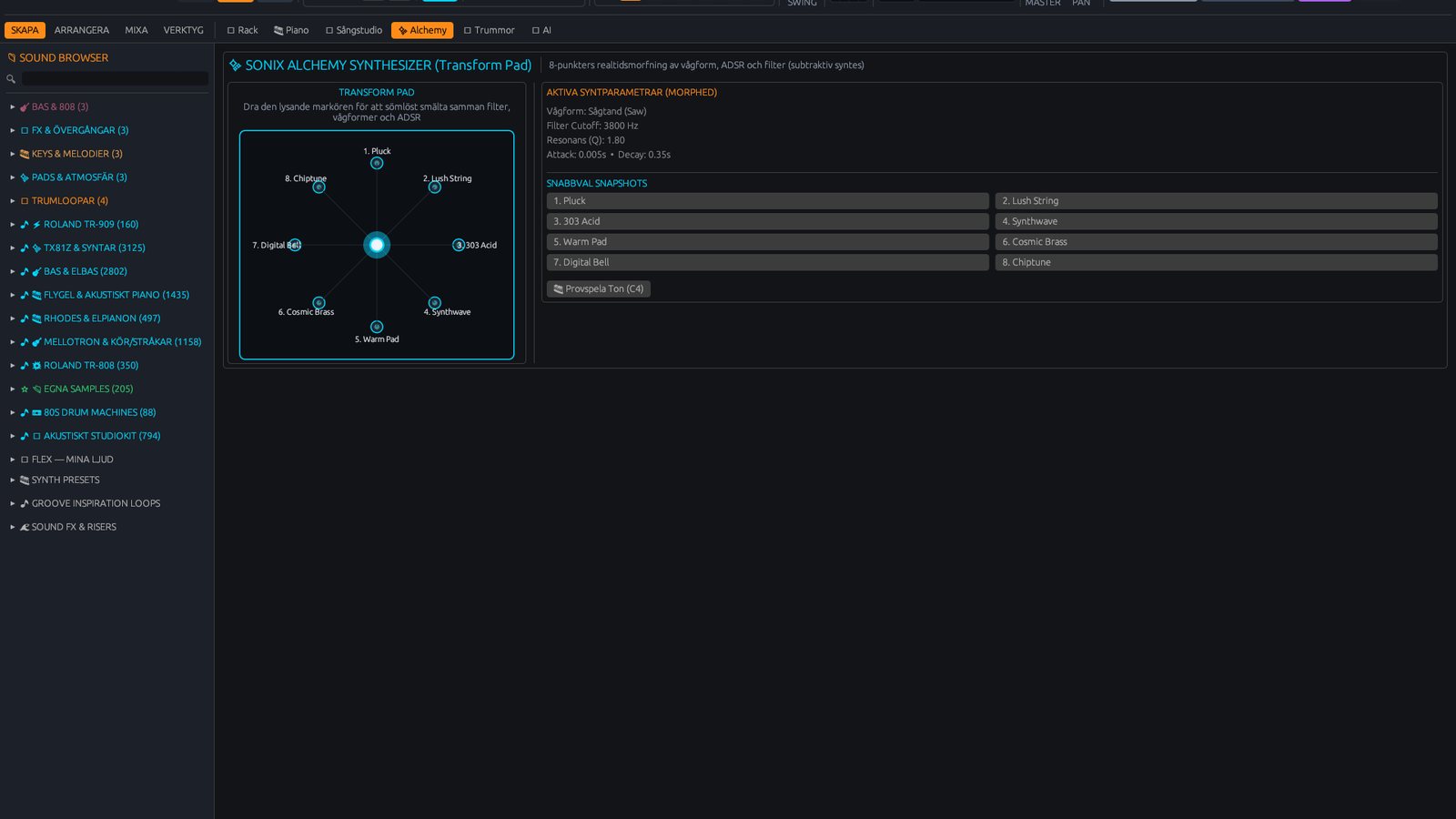
The Alchemy synthesiser
Alchemy: four waveforms, filter, drive and an eight-snapshot morph pad.
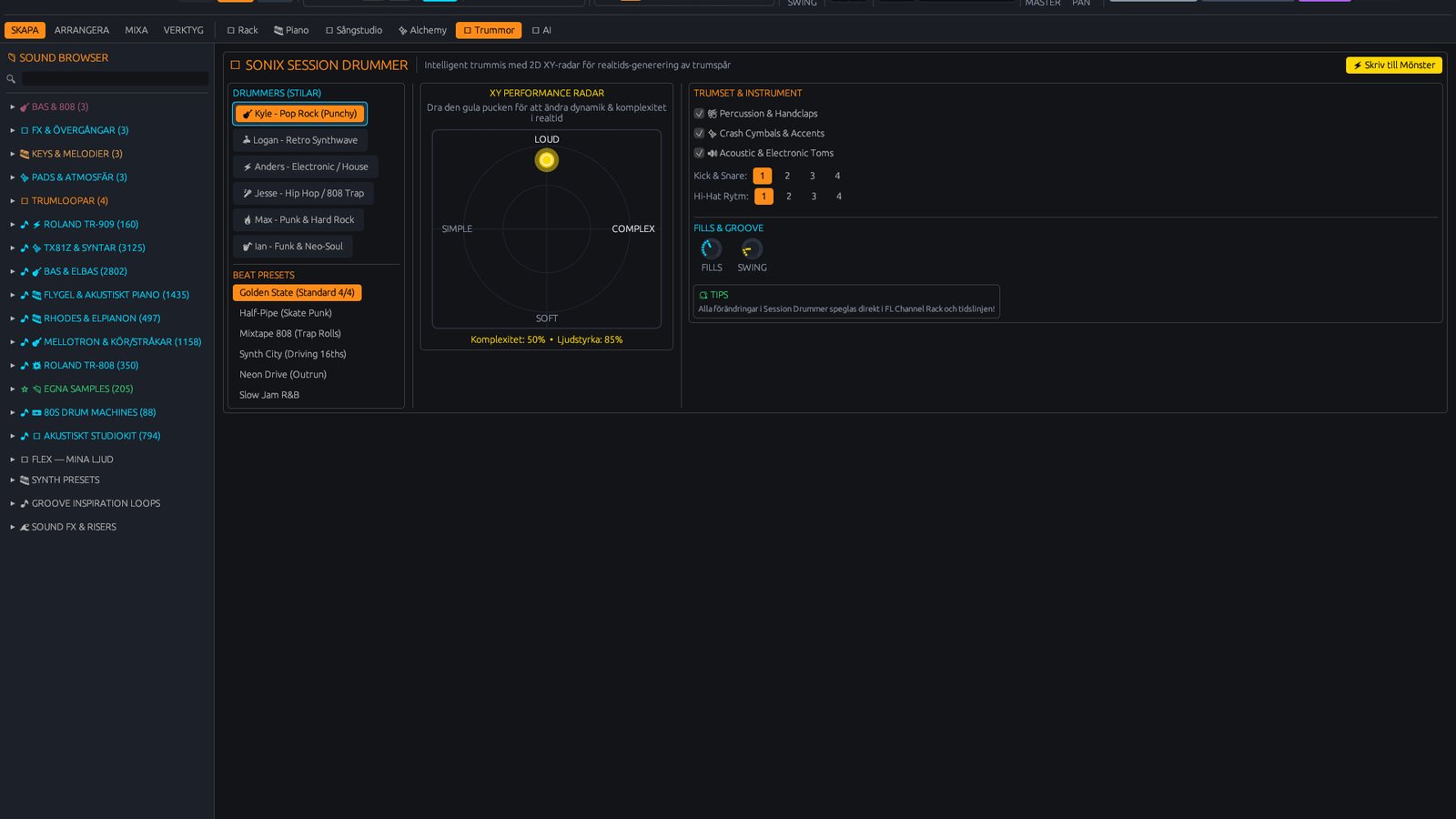
The session drummer
Session drummer: patterns generated from a style and a feel.
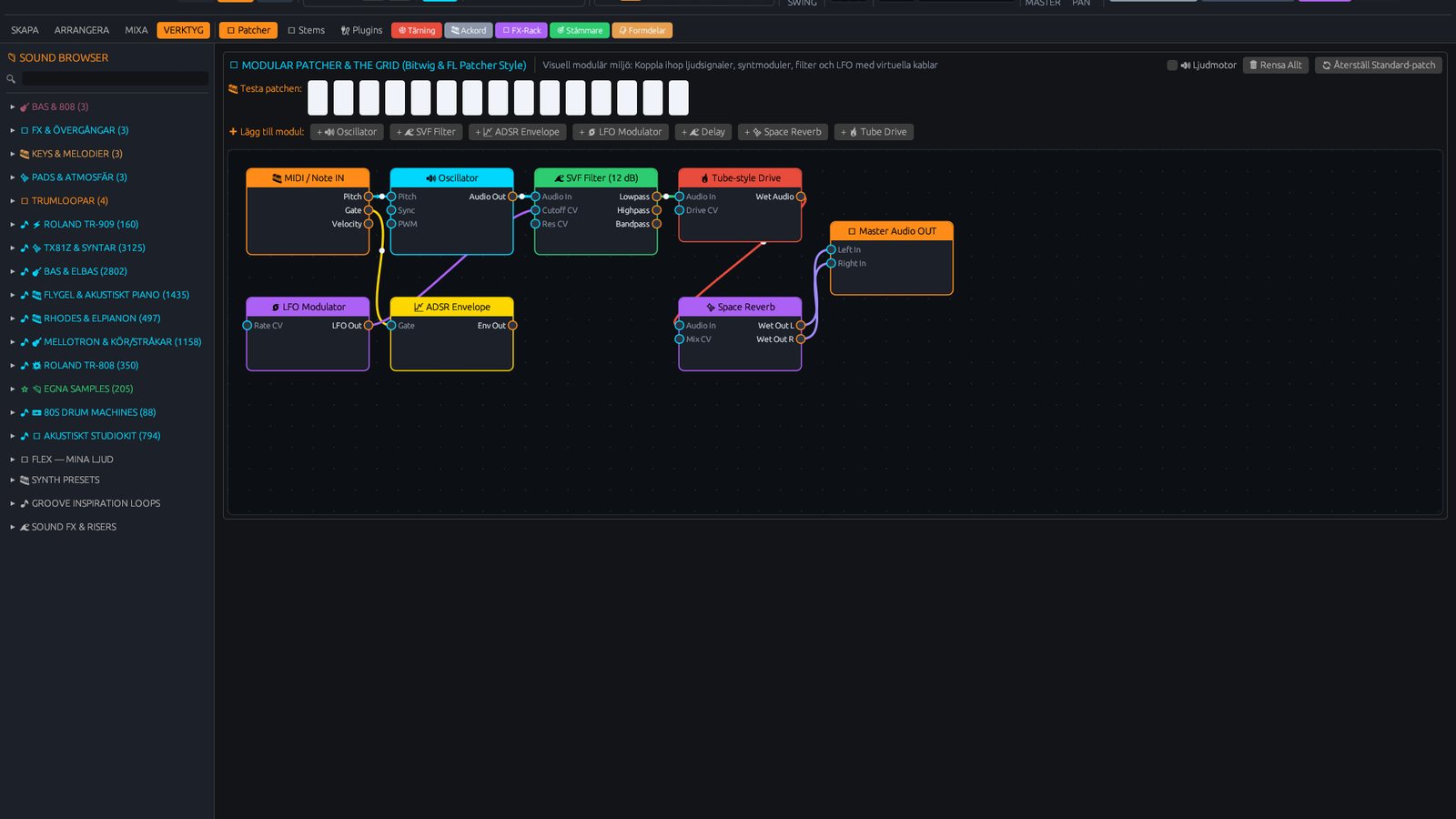
The modular patcher
Modular patcher: nodes and cables, evaluated in topological order.
The stem separator
Stem separator: the spectral DSP path is the default.
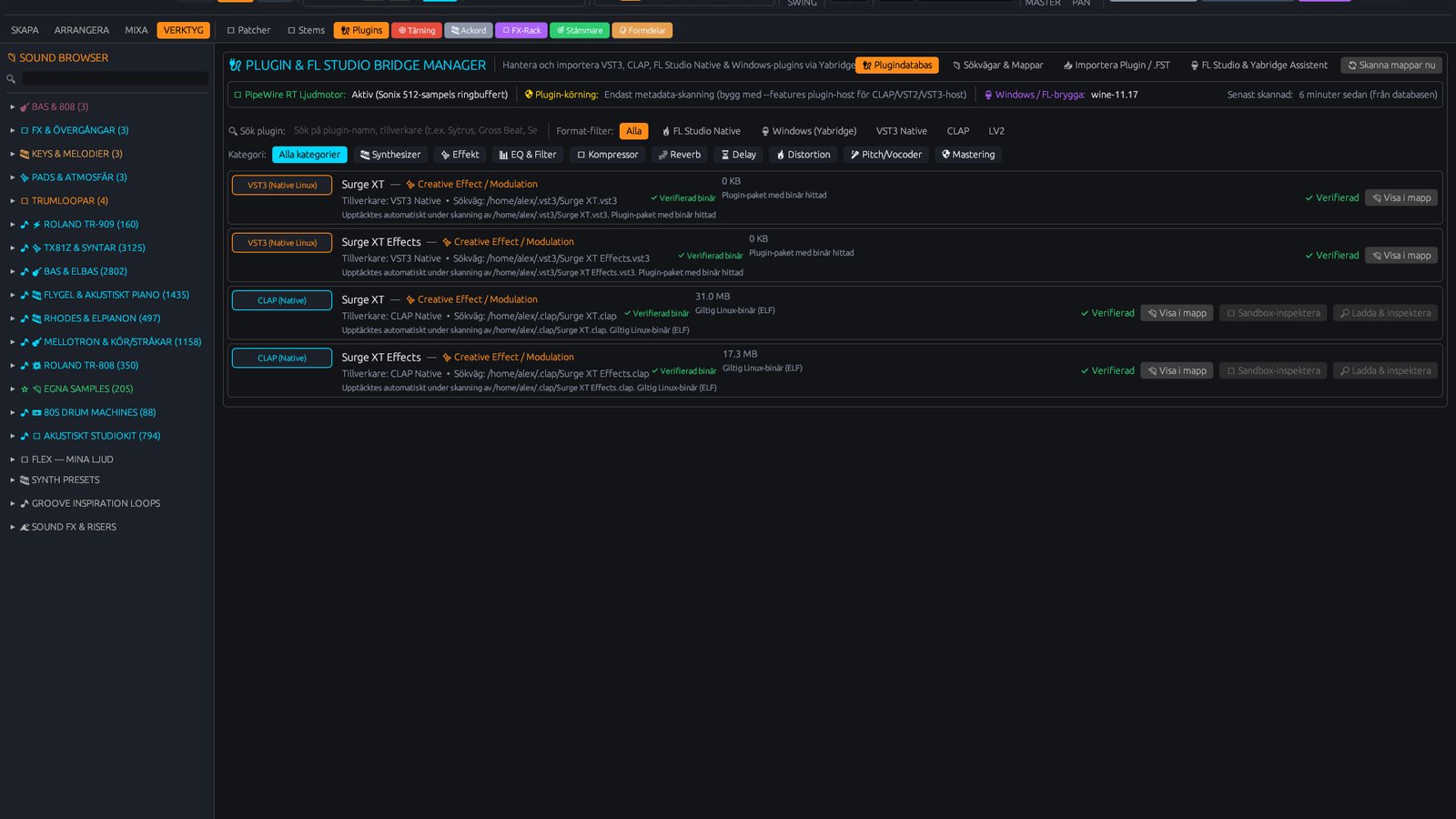
The plugin manager
Plugin manager: scans VST3, CLAP, LV2, VST2 and .fst folders.
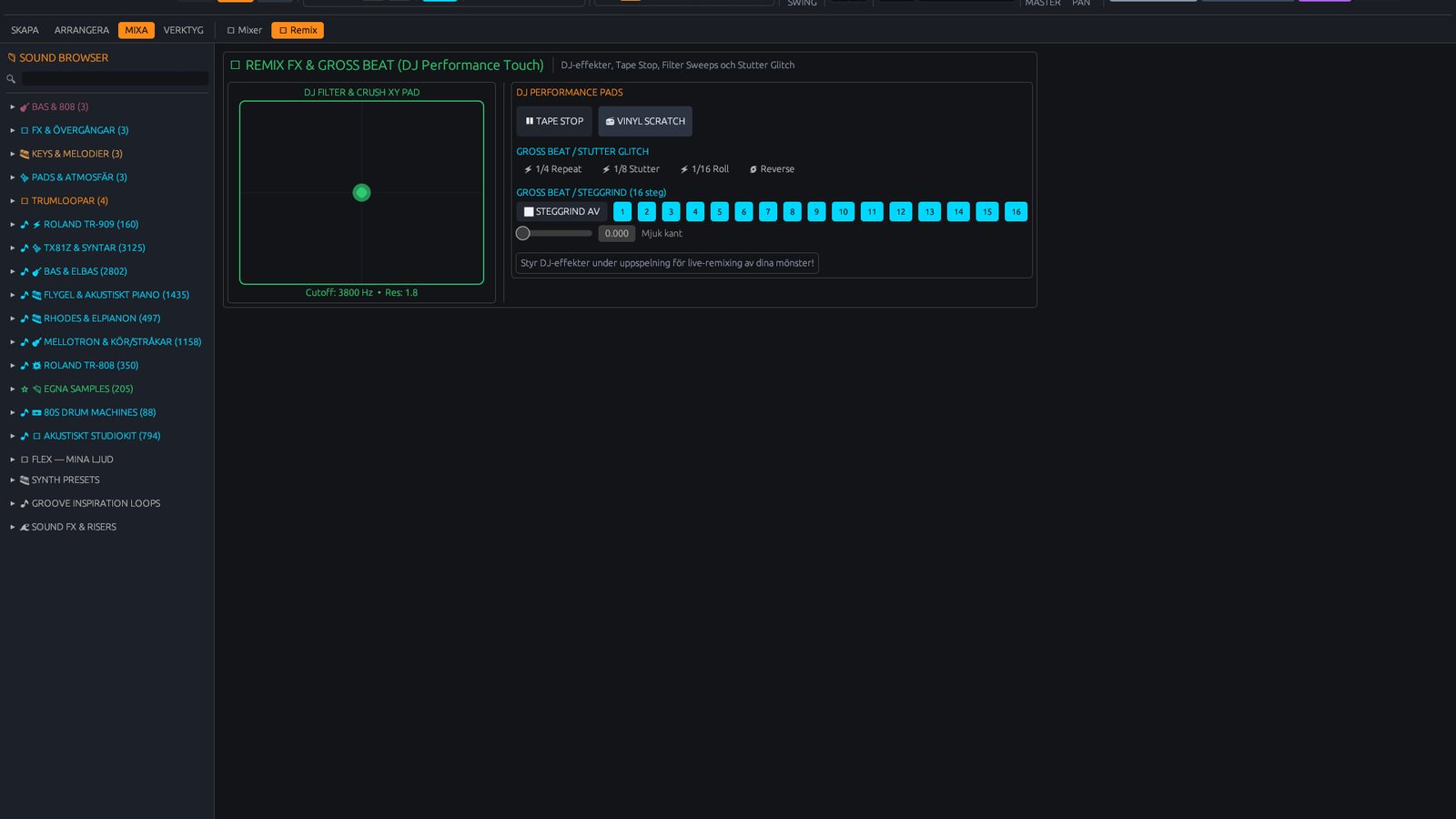
Remix FX
Remix FX: performance effects over the whole mix.
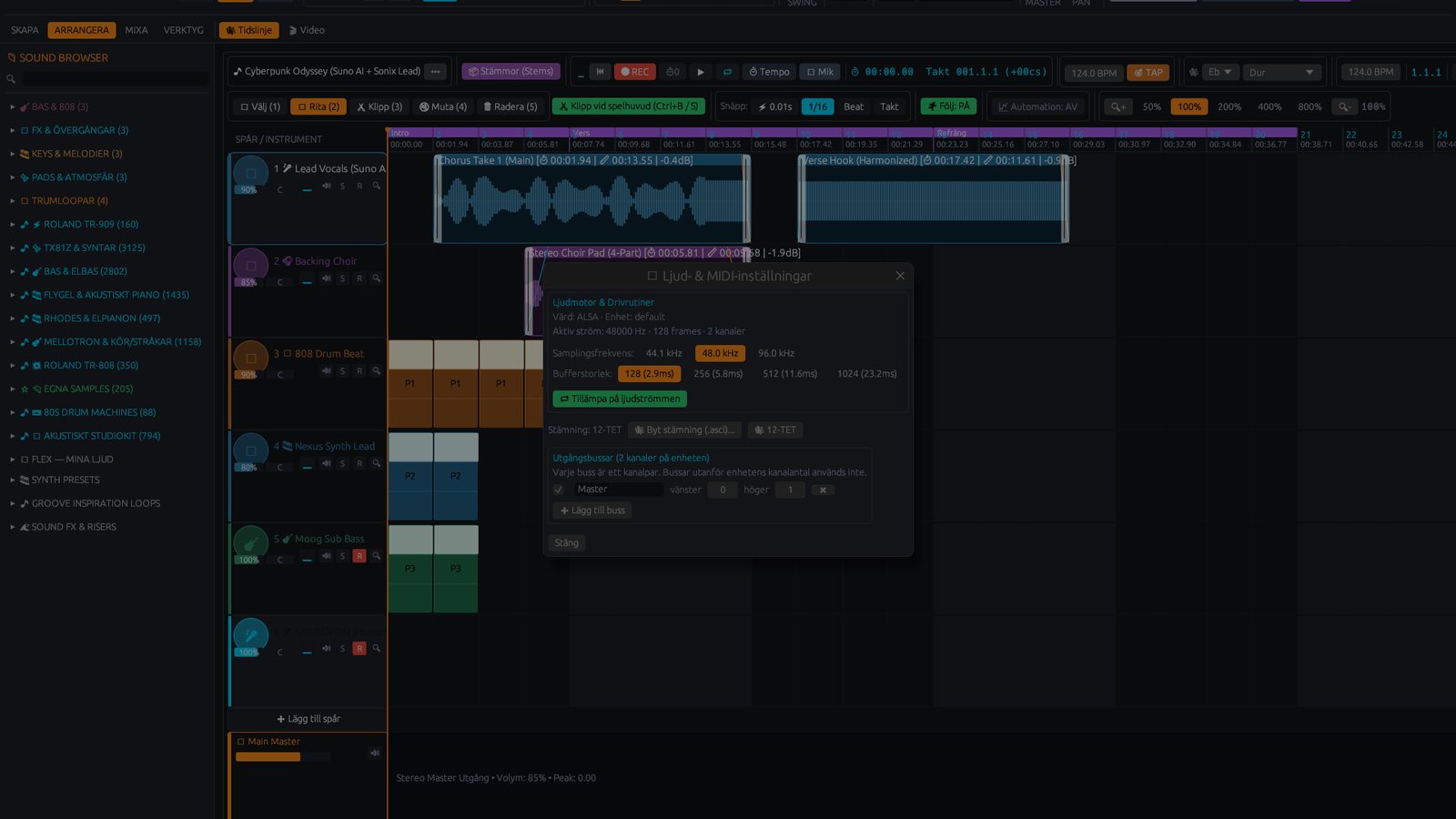
Audio settings
Audio settings: real host, device and stream, rebuilt live.
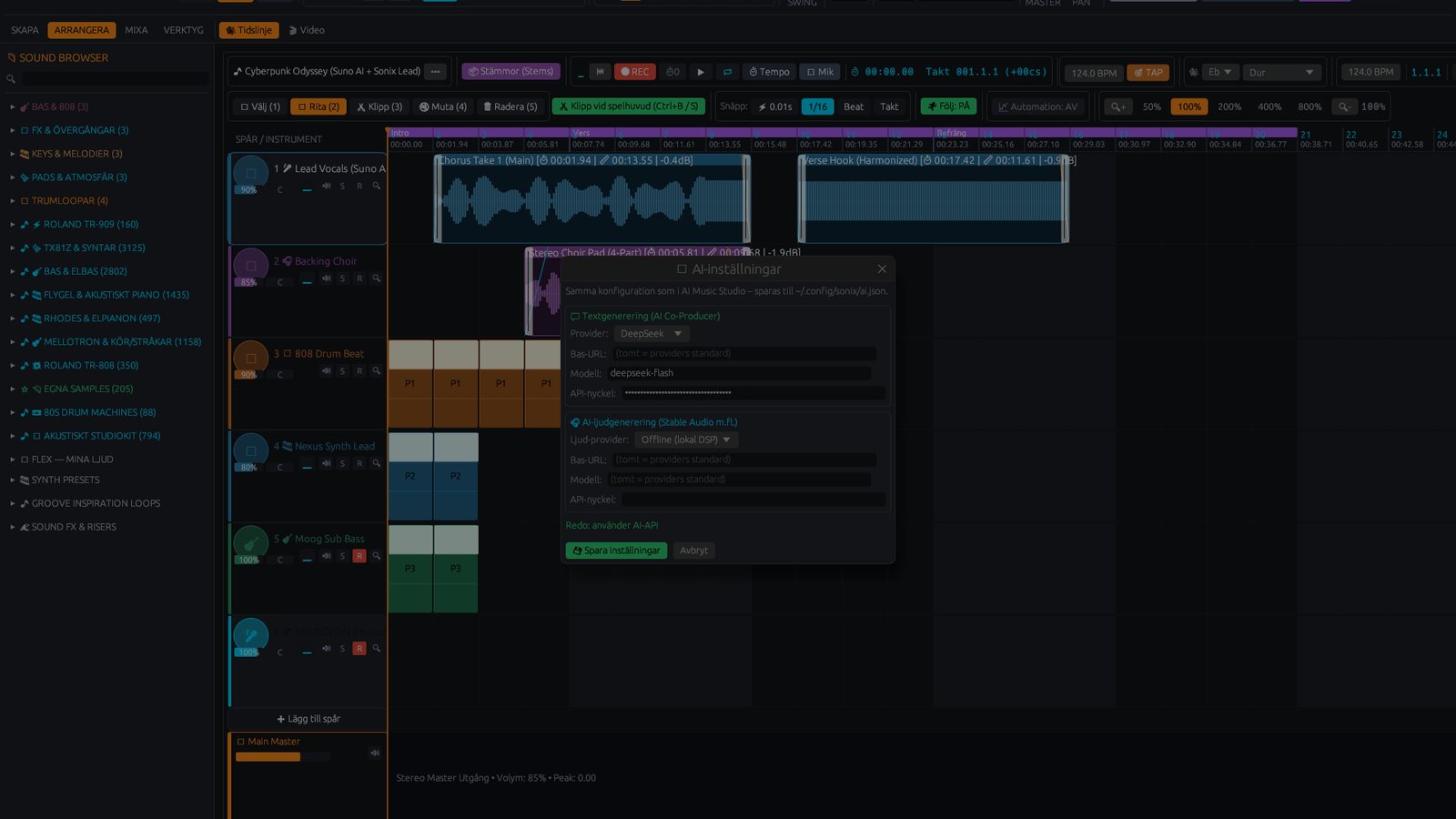
AI settings
AI settings: the endpoint and key you choose, stored on your disk.
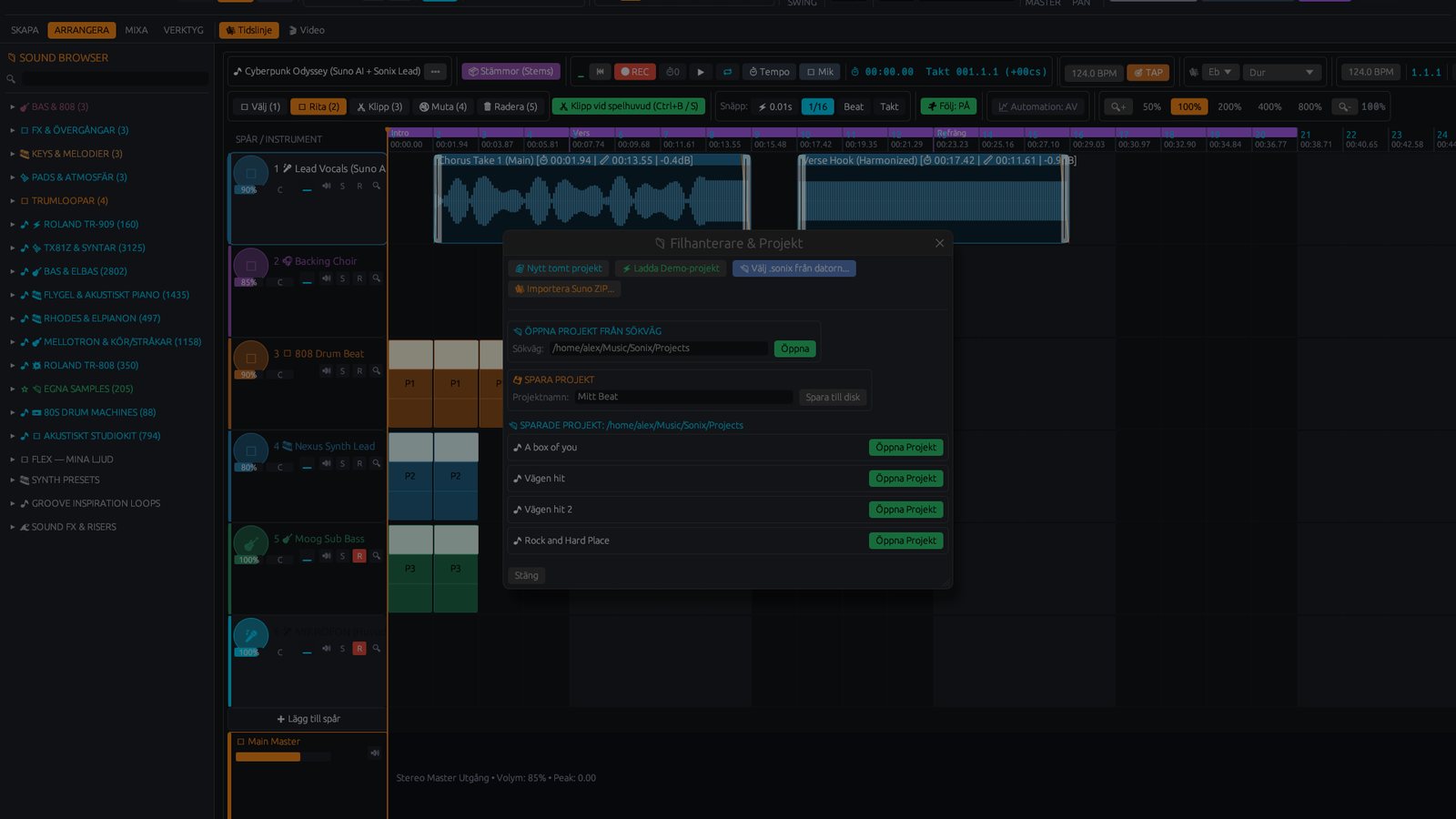
The project manager
Project manager: recent projects and their folders.
The render queue
Render queue: offline renders, one job at a time.
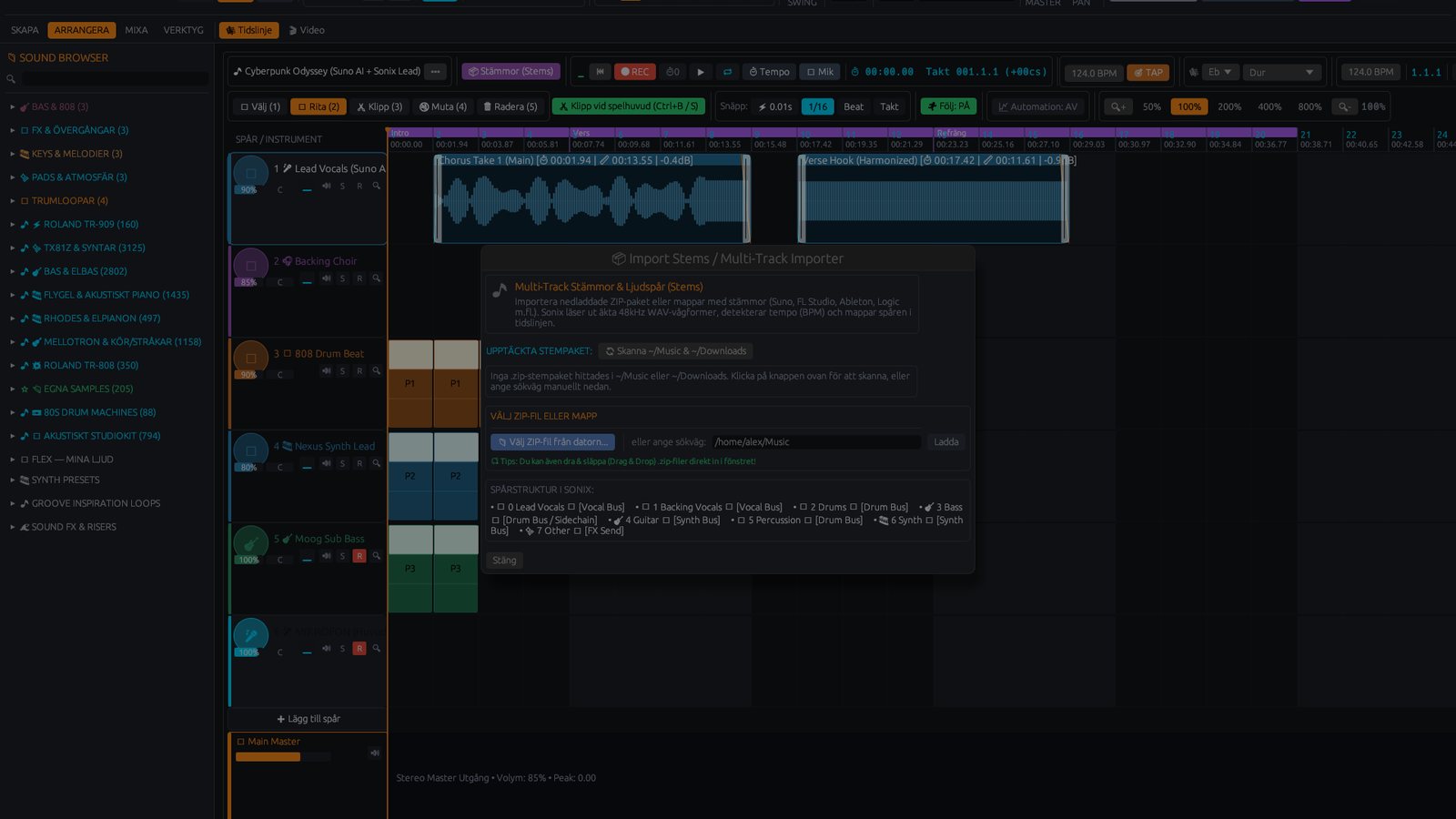
Suno stem import
Suno import: reads exported stem packs and names the tracks by role.
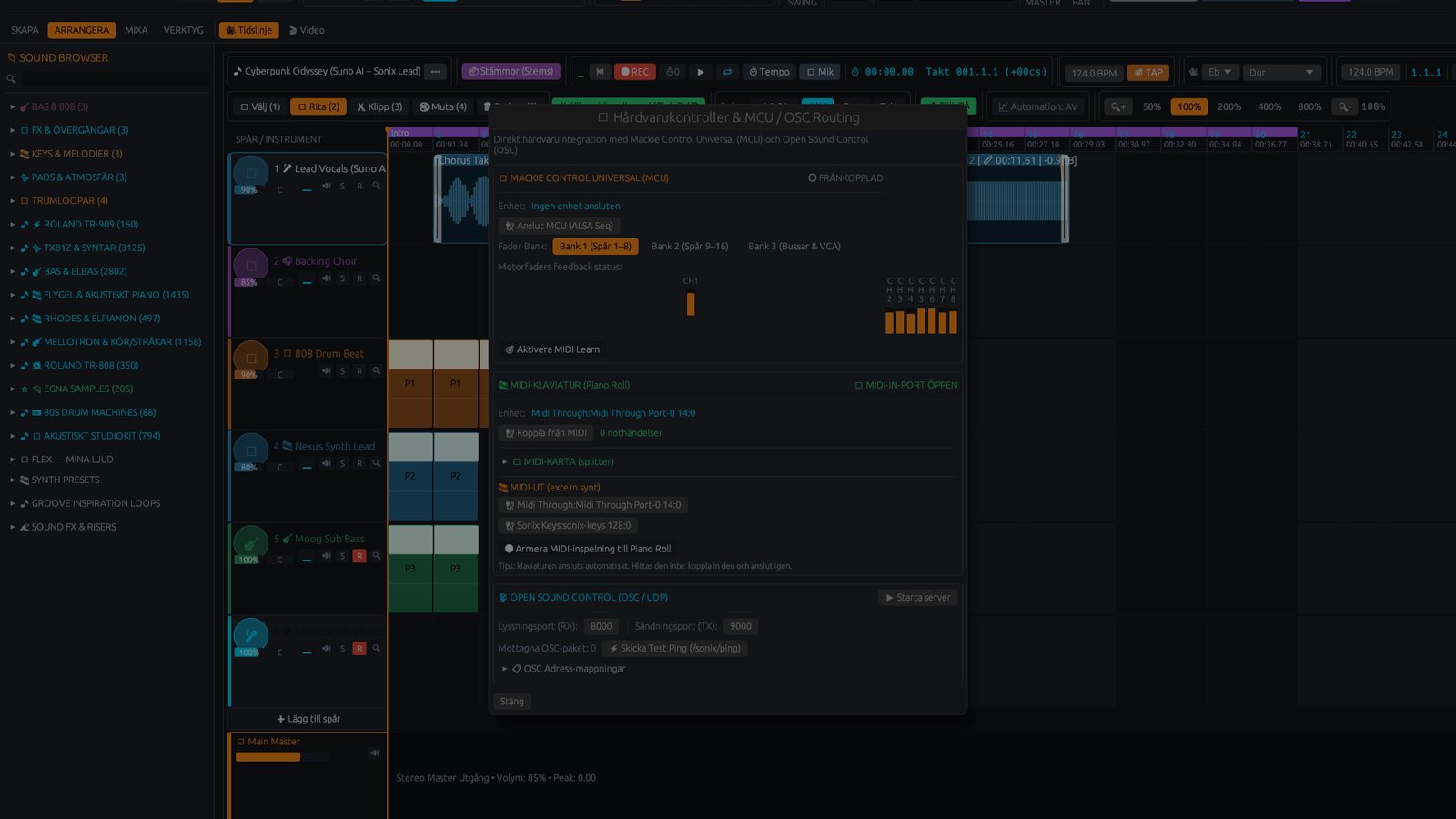
MIDI controller setup
MIDI: ALSA input, MCU-style control and a live device list.
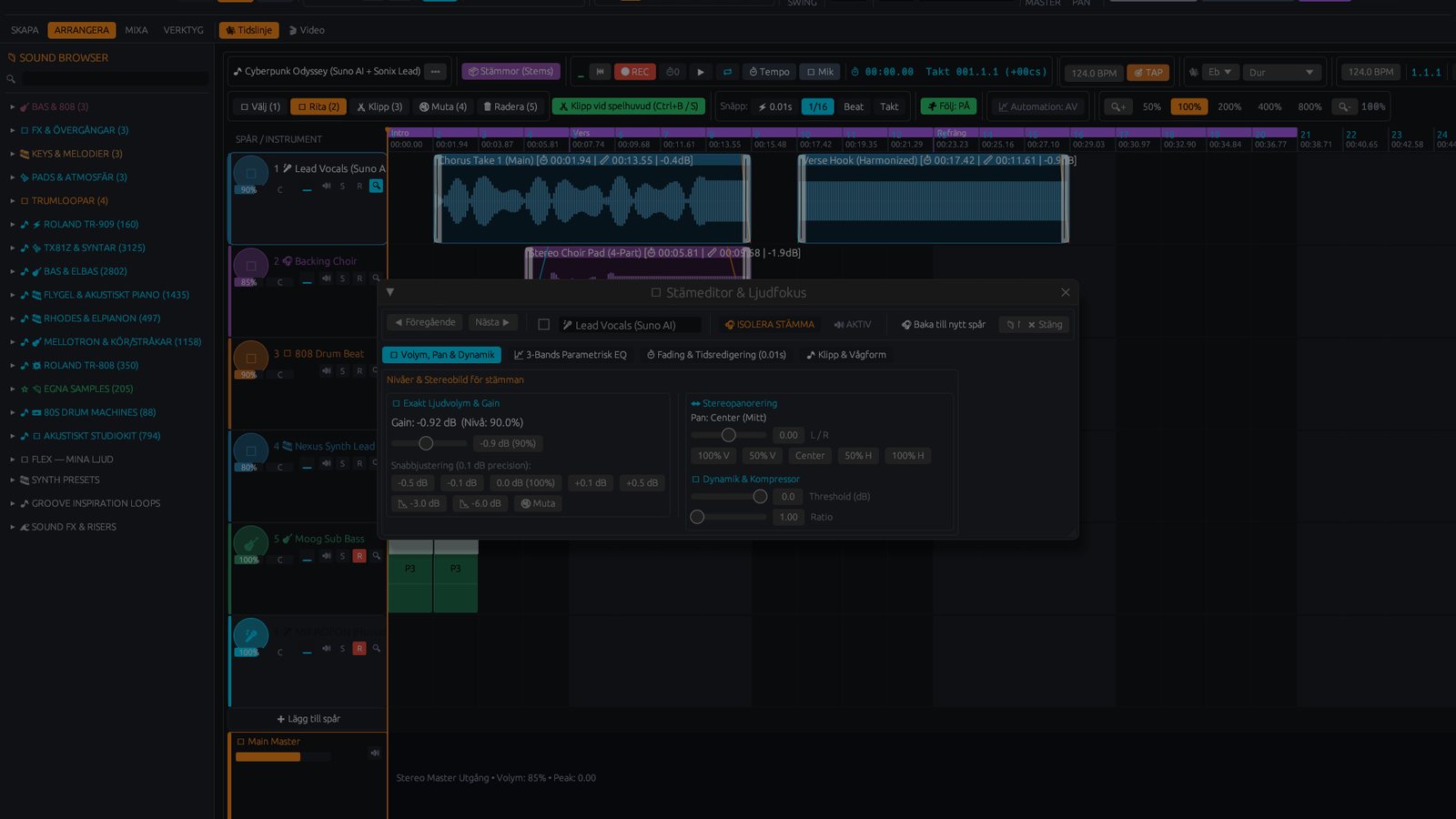
The stem focus editor
Stem focus: pull one stem forward without remixing the rest.
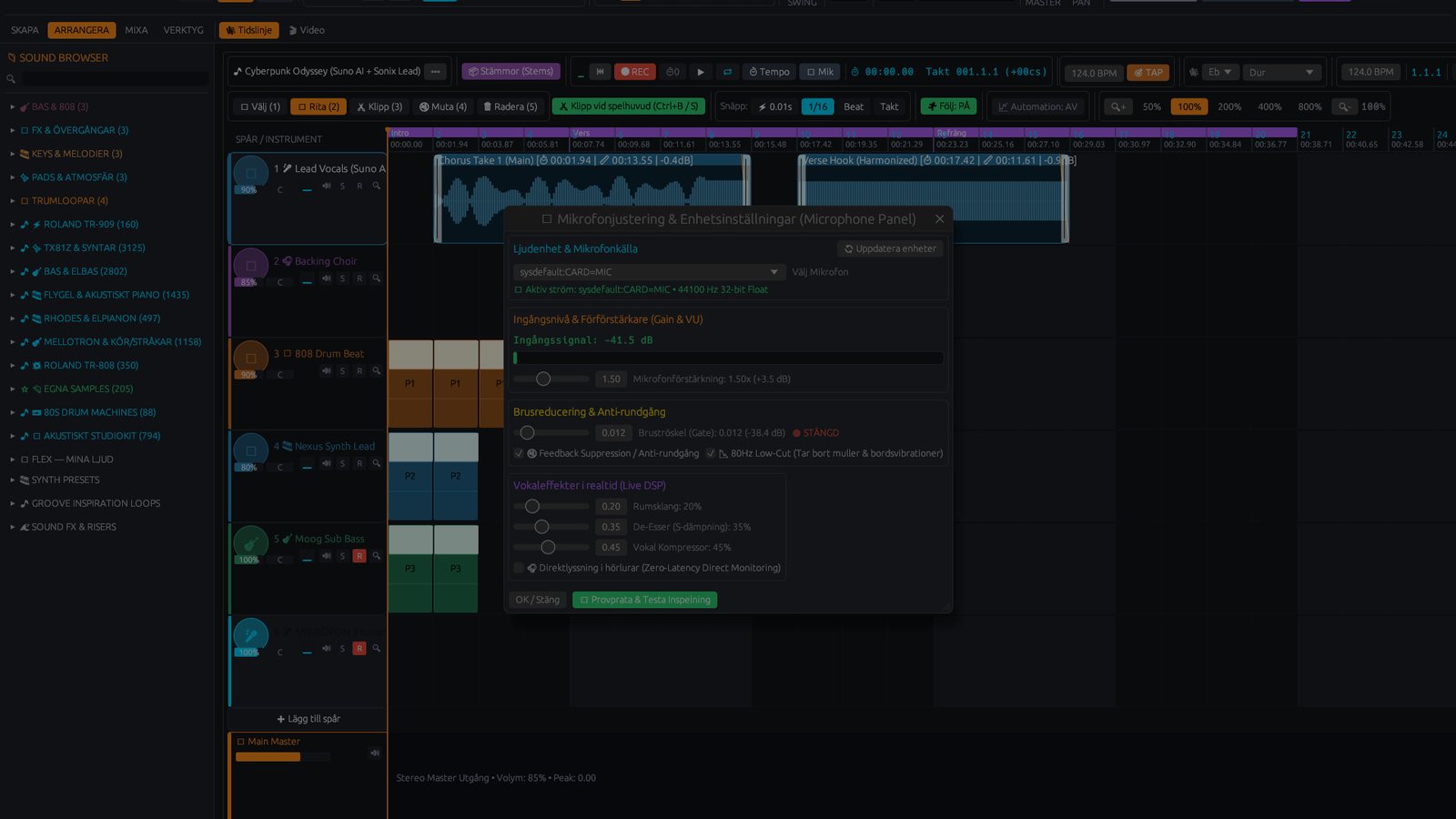
Microphone settings
Microphone settings: device, gain and monitoring.
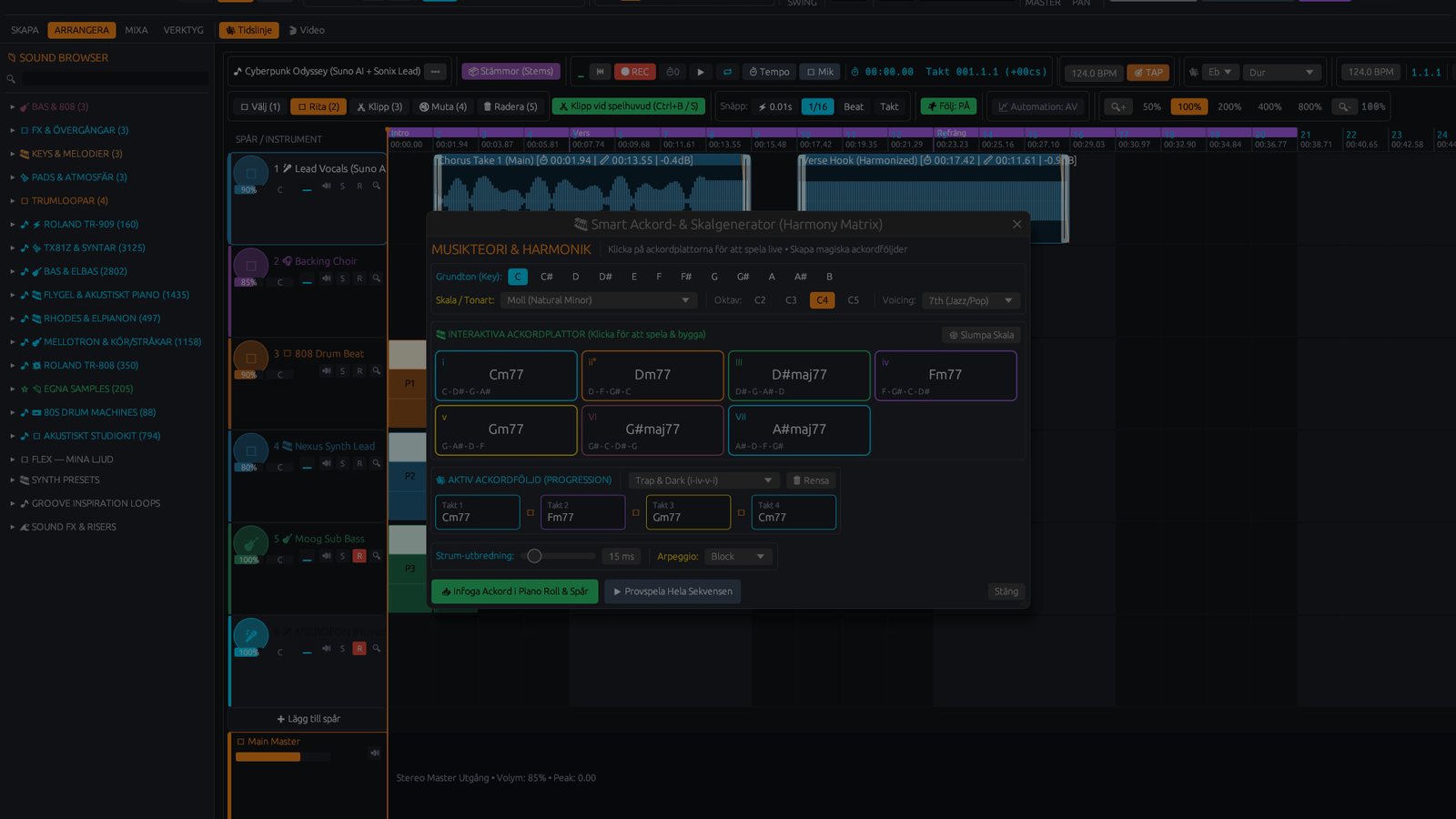
The chord matrix
Chord matrix: twelve scales, Roman numerals, voicings and strum.
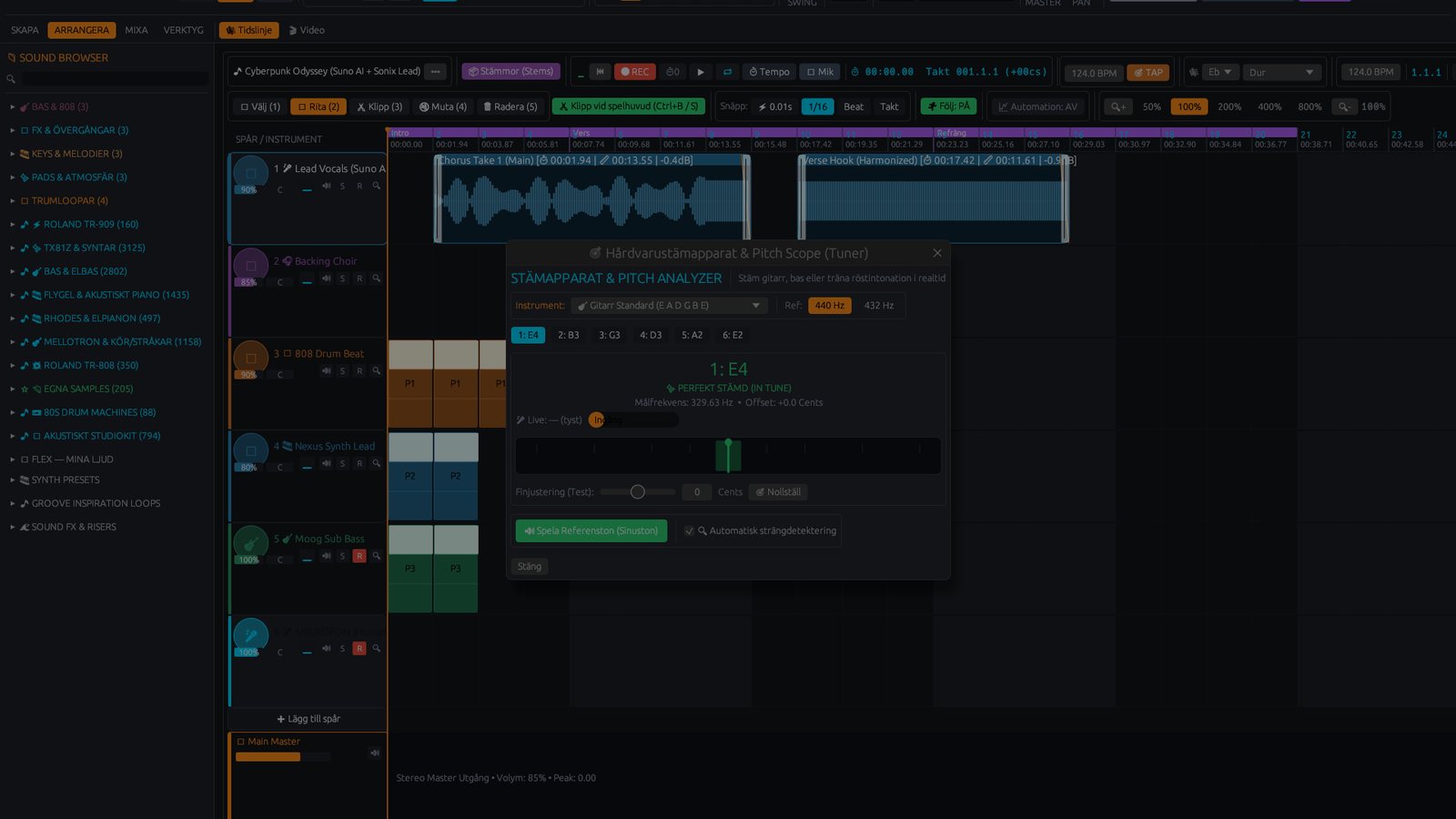
The strobe tuner
Strobe tuner, fed by the microphone.
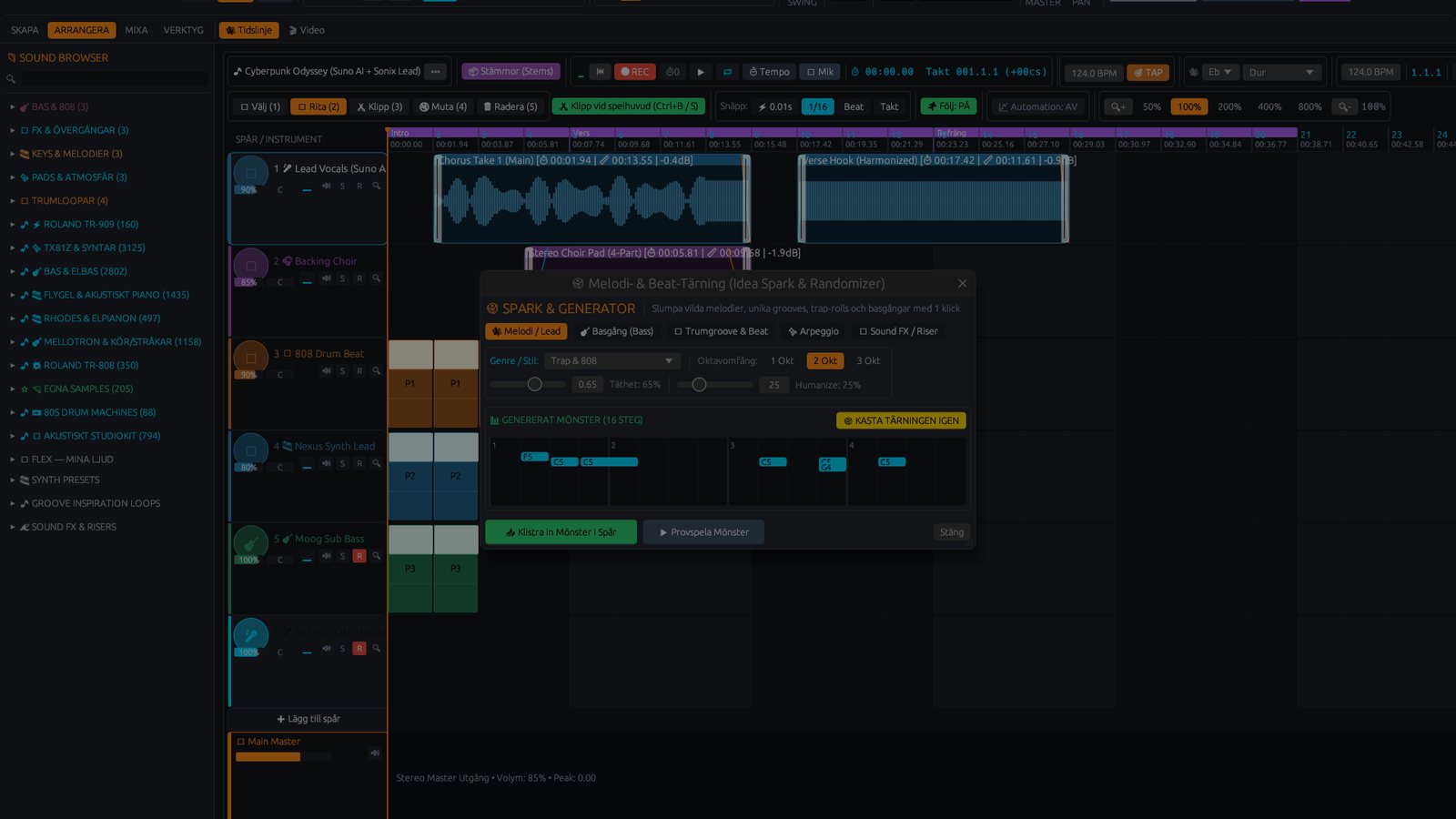
The dice generator
Dice: a phrase from a scale, repeatable with the same seed.
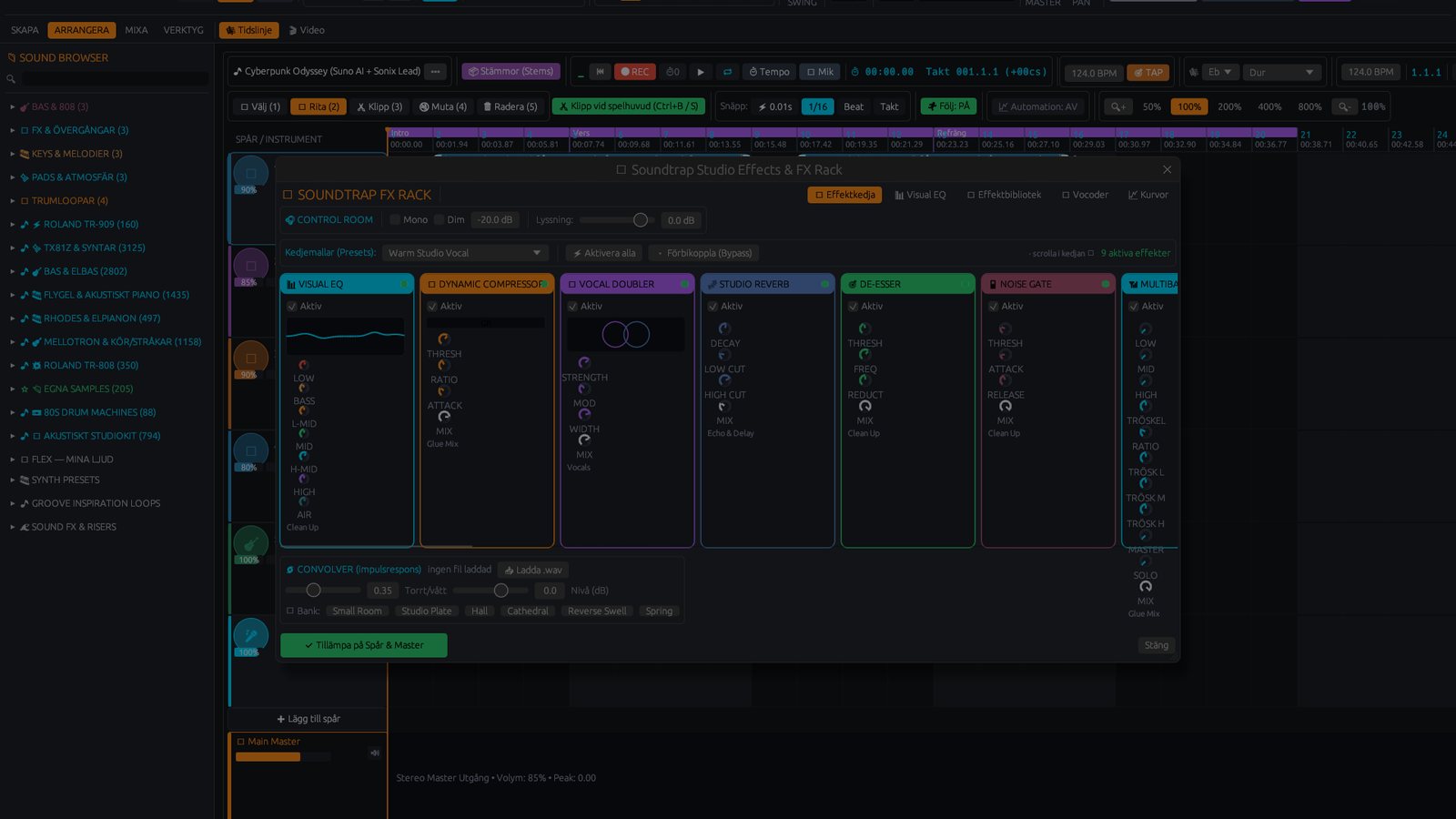
The modular FX rack
Master FX rack: pedals in a chain, plus a visual parametric EQ.
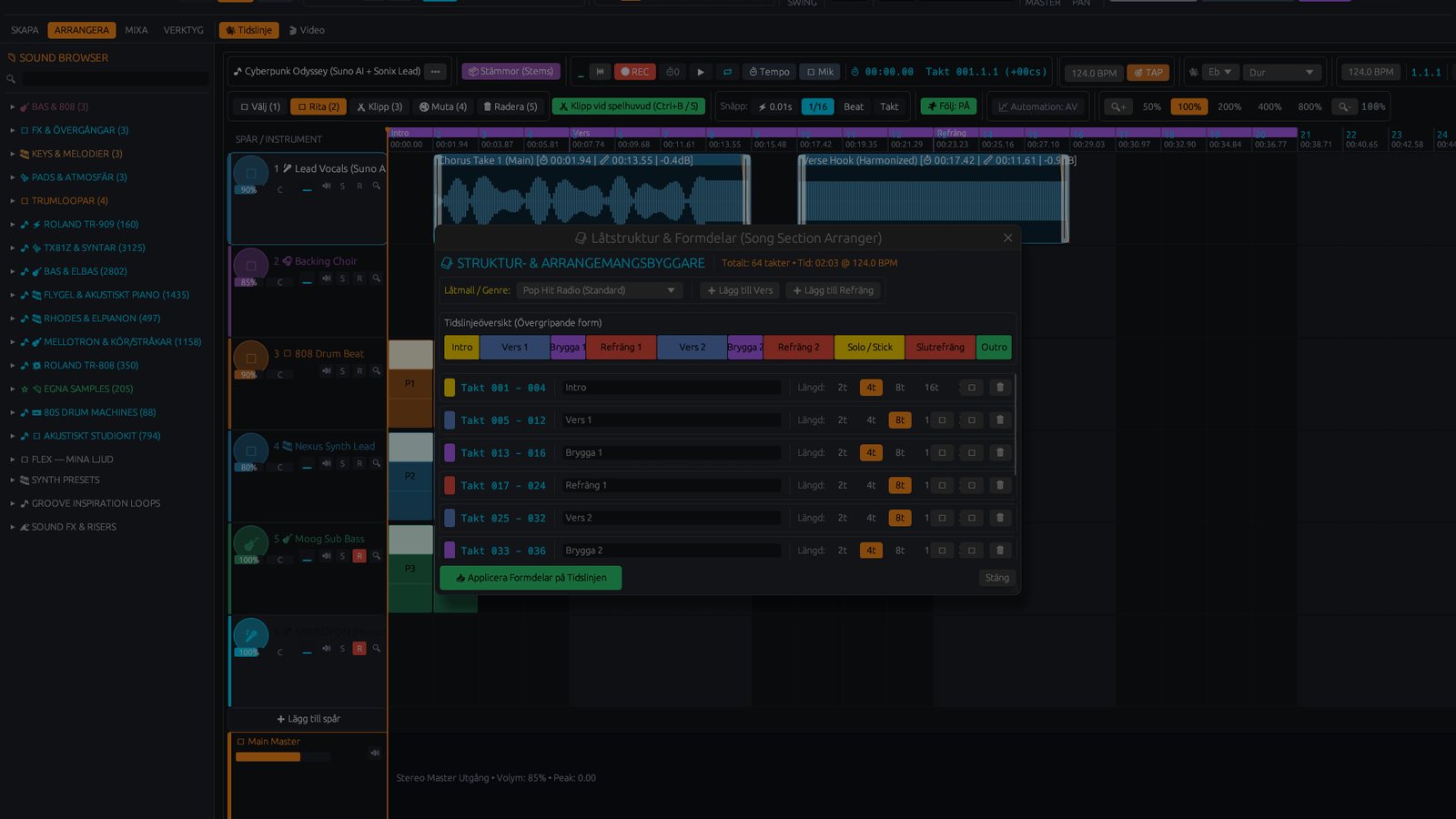
Song structure
Song structure: sections laid out over the timeline.
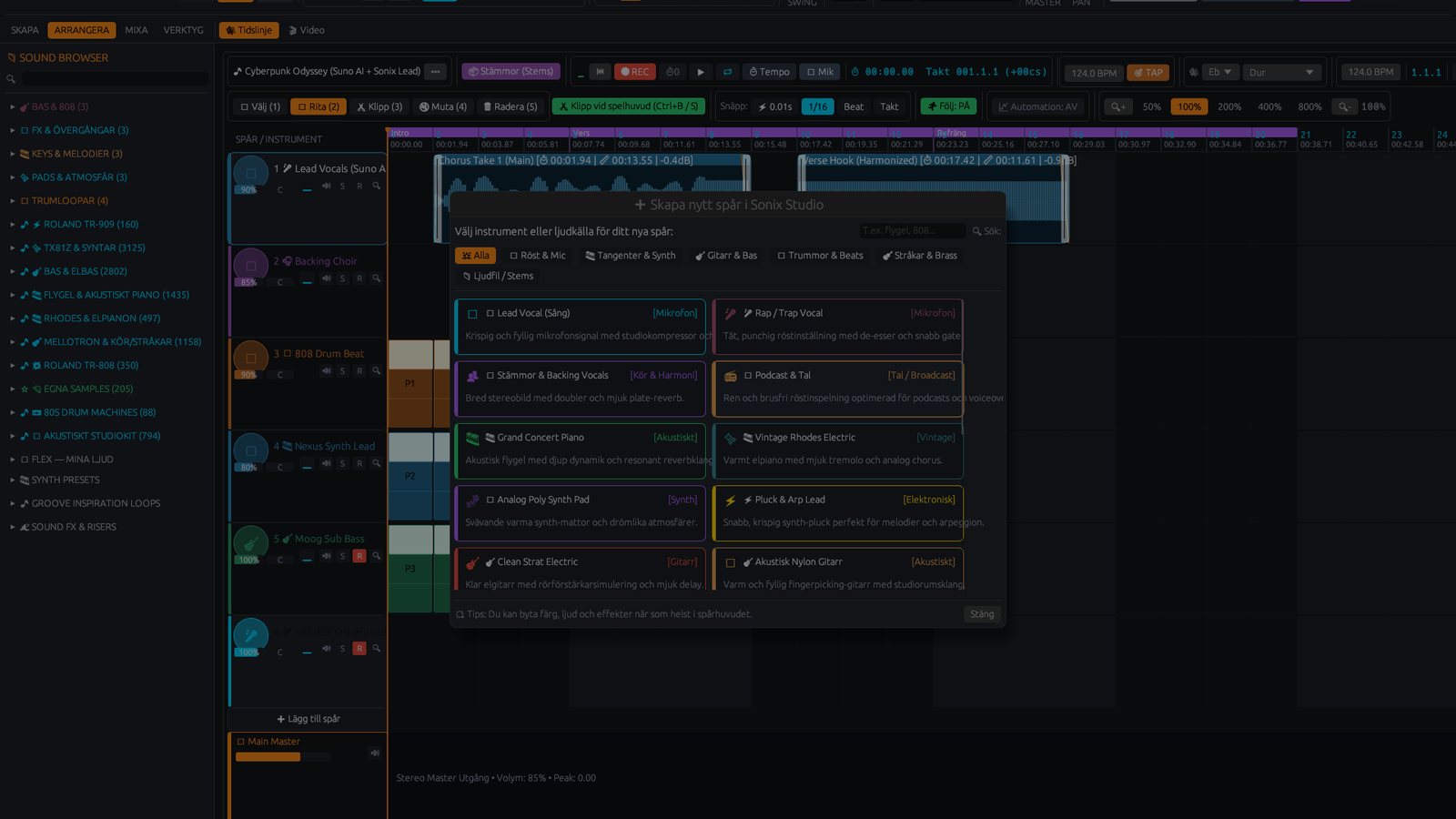
Adding a track
Add track: audio, instrument, MIDI or a bus.
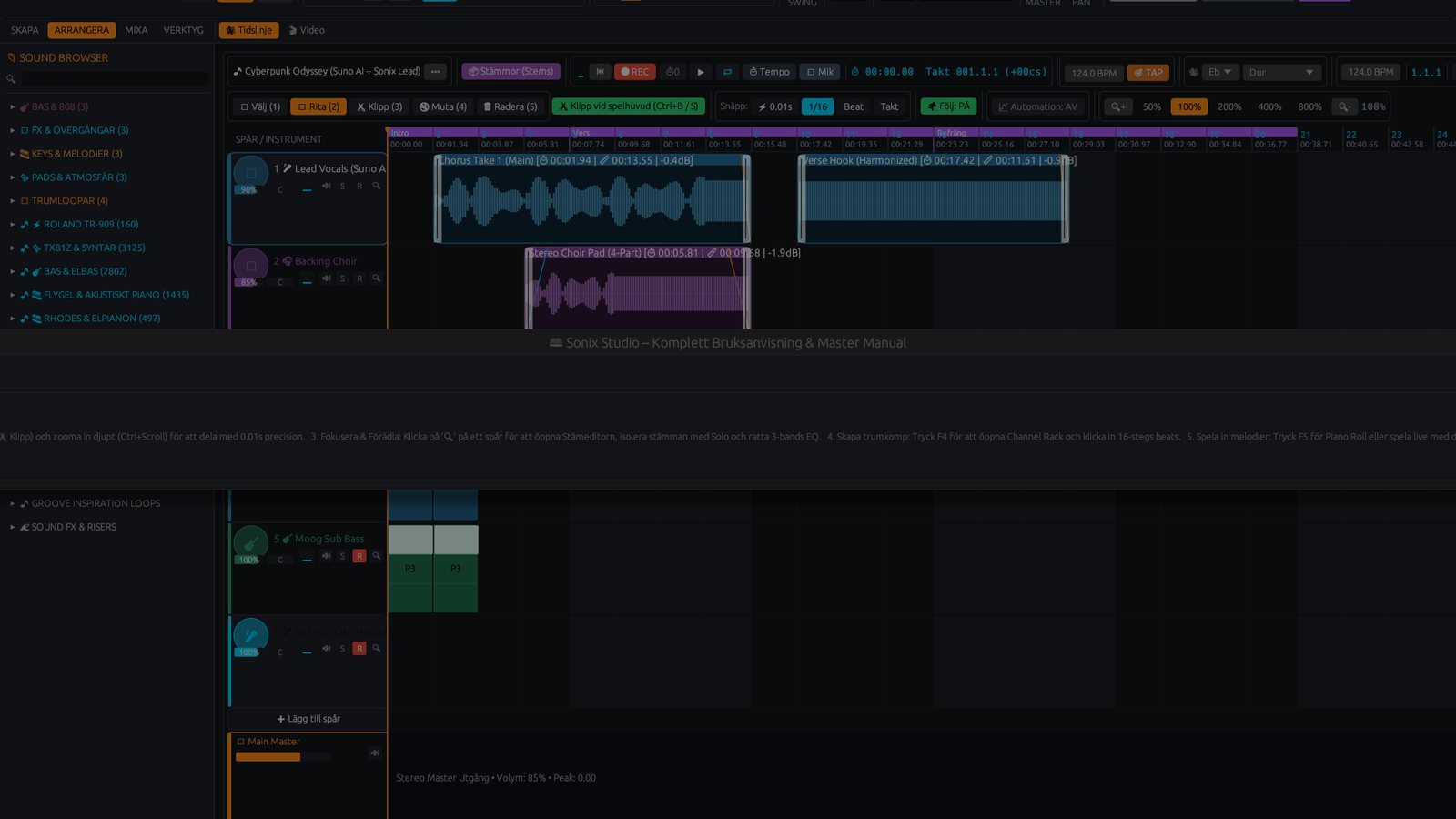
The built-in manual
The manual ships inside the app.
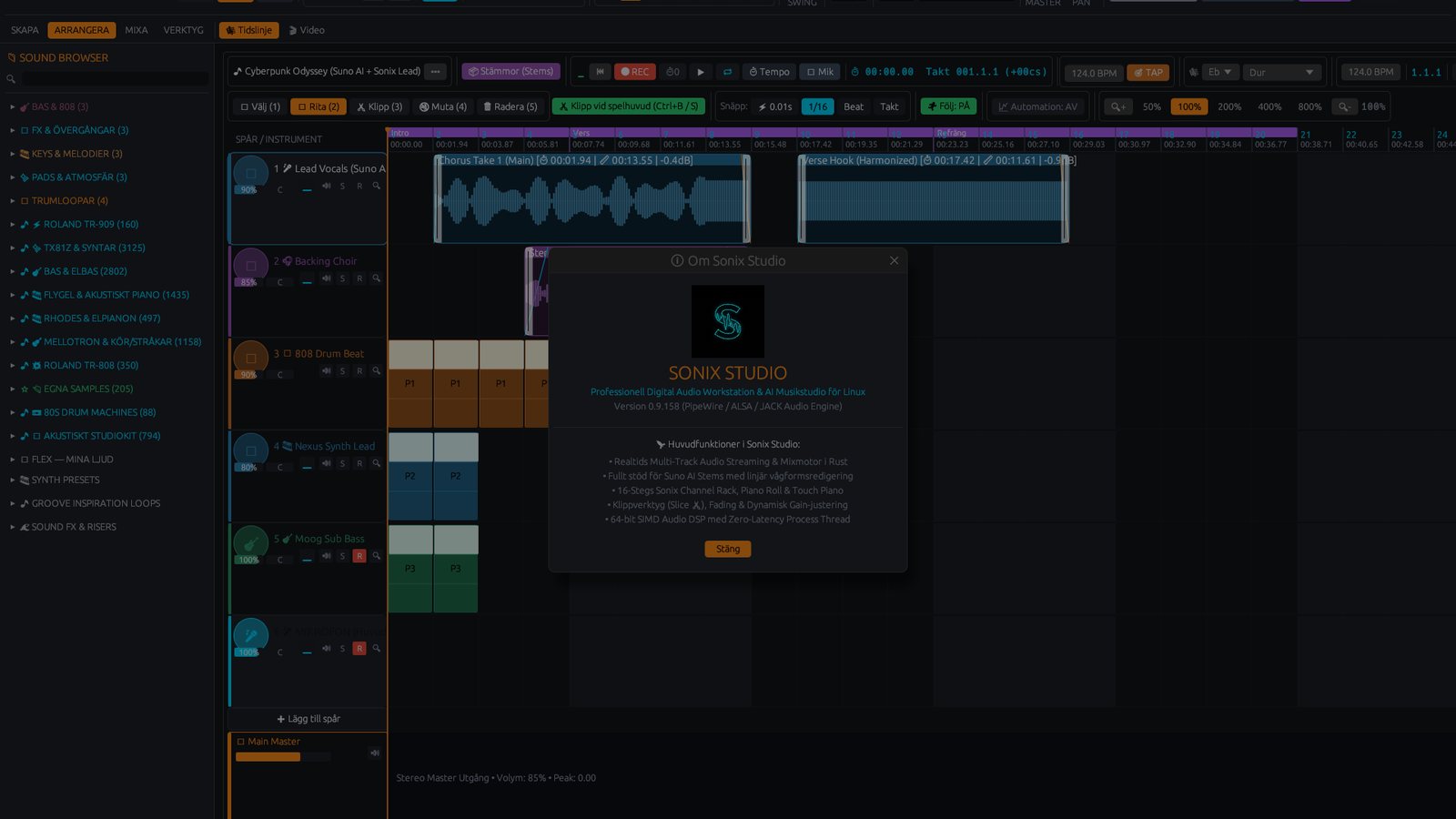
About Sonix
About: version, build and licences.
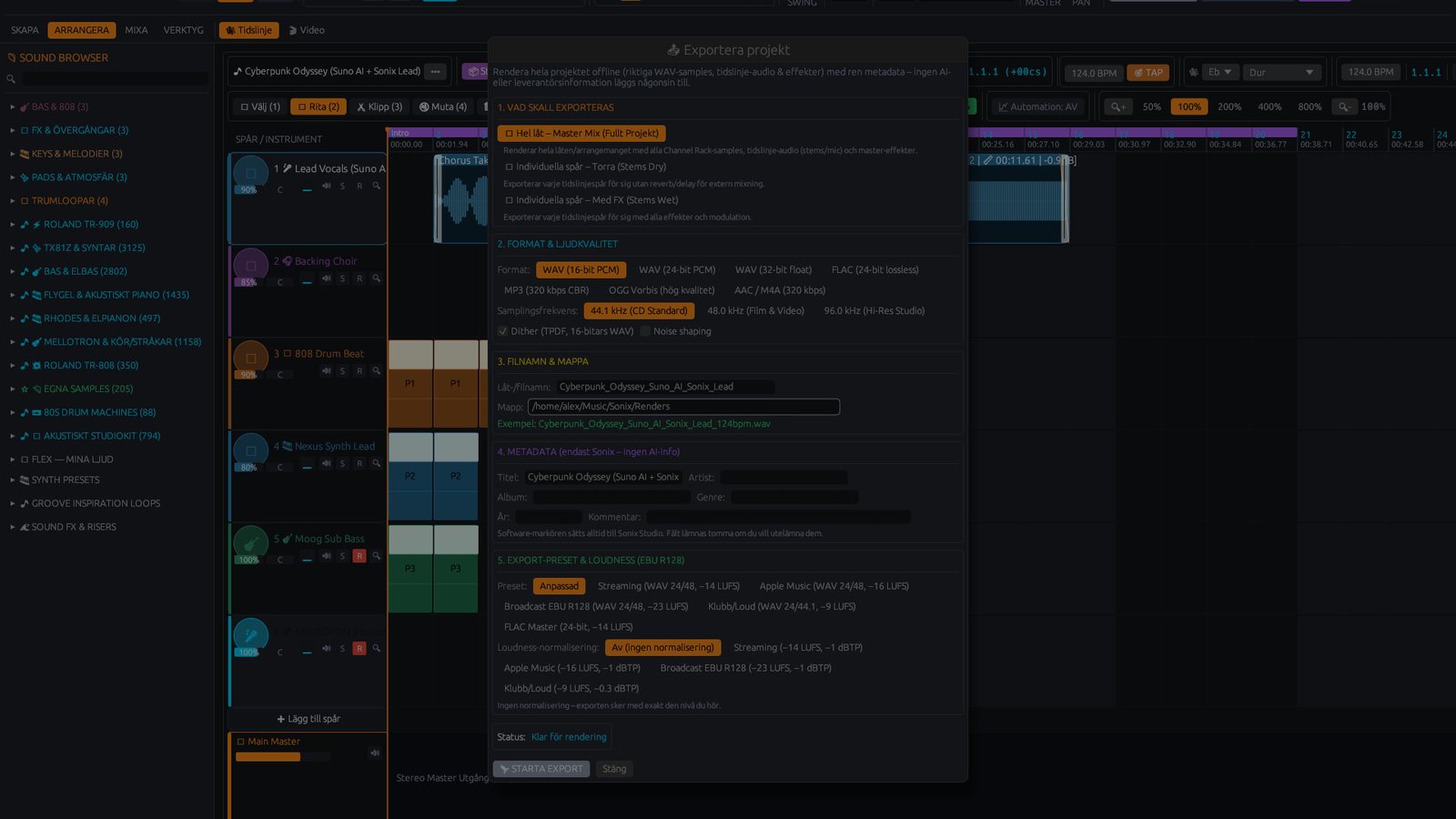
The export question
Export asks what you want: an MP3 for listening or a WAV for the master.
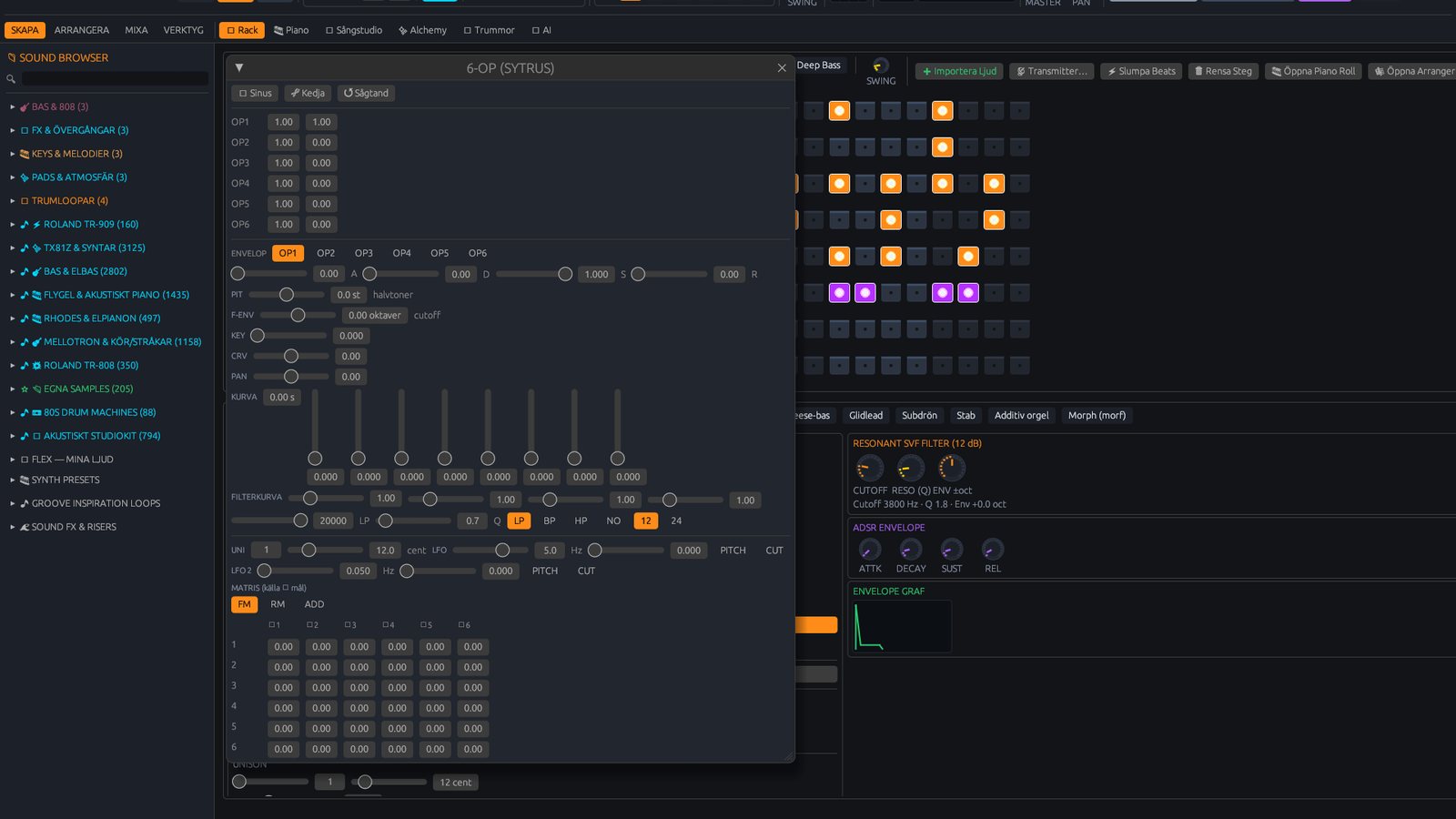
The six-operator synth
Six operators: FM, RM and additive in one matrix, six envelopes and four filters each.
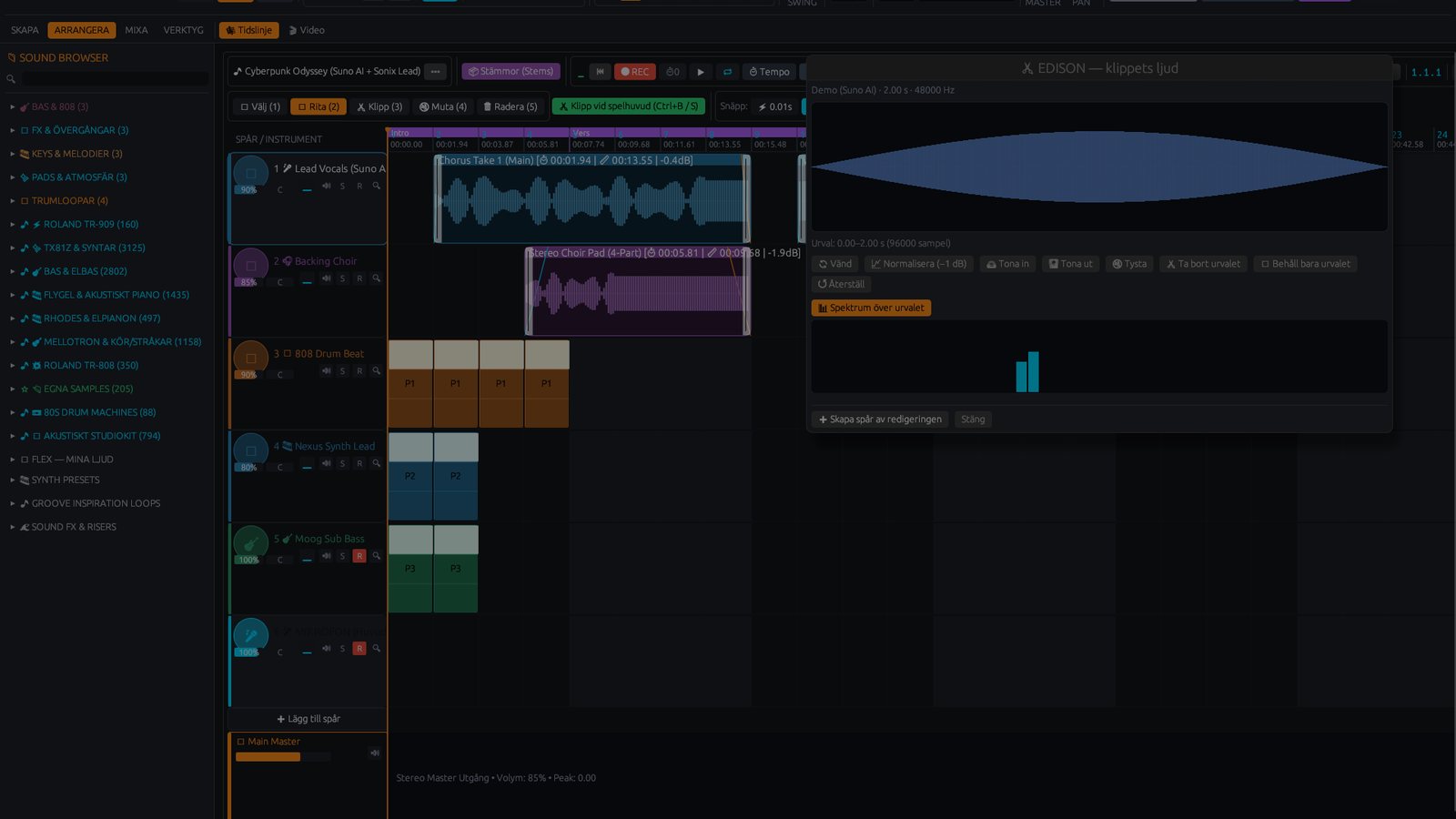
Edison, the clip editor
Edison: reverse, normalise, fade, silence or trim a selection, and read its spectrum.
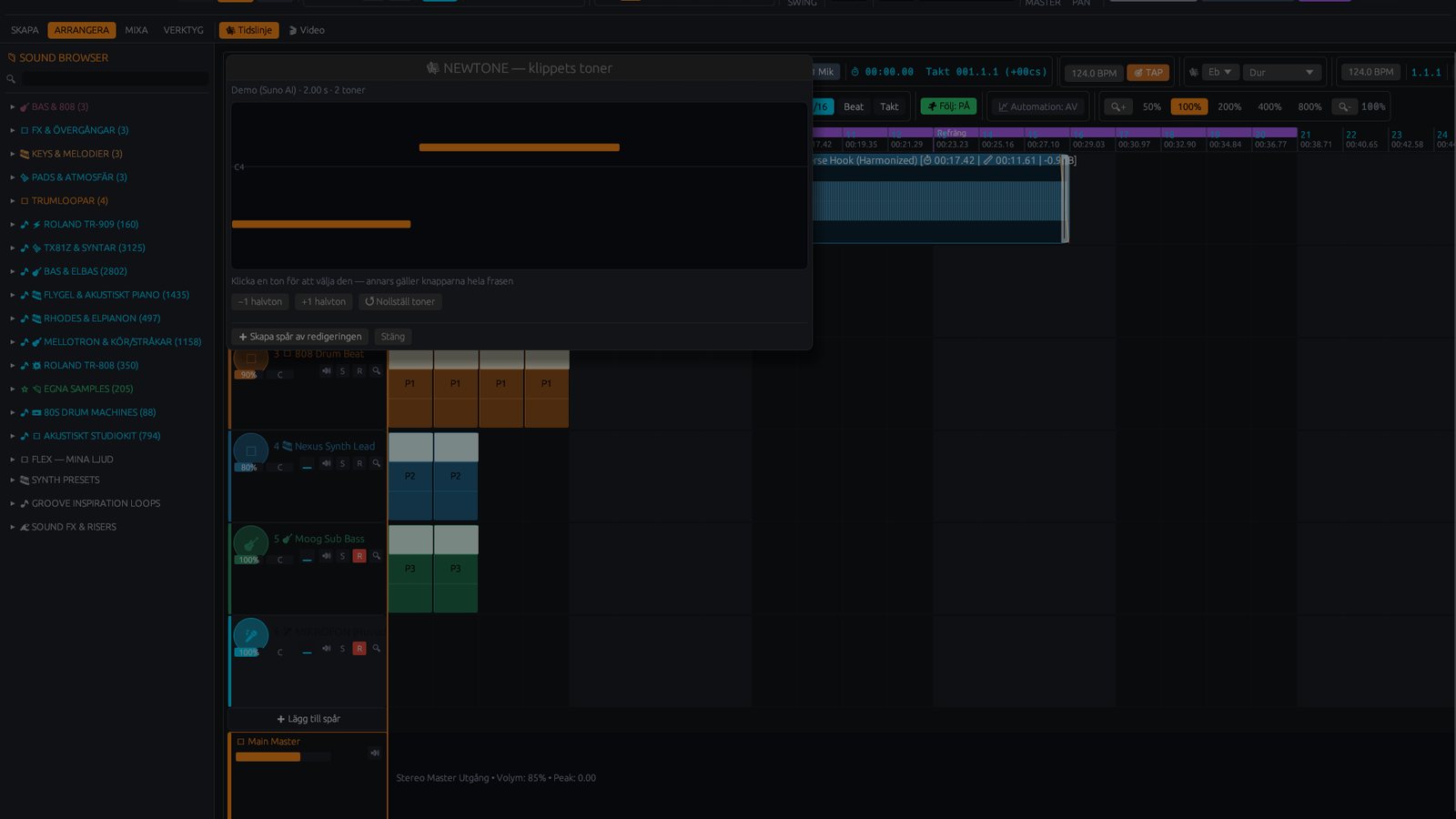
Newtone, the pitch editor
Newtone: the notes of a clip, moved in semitones.
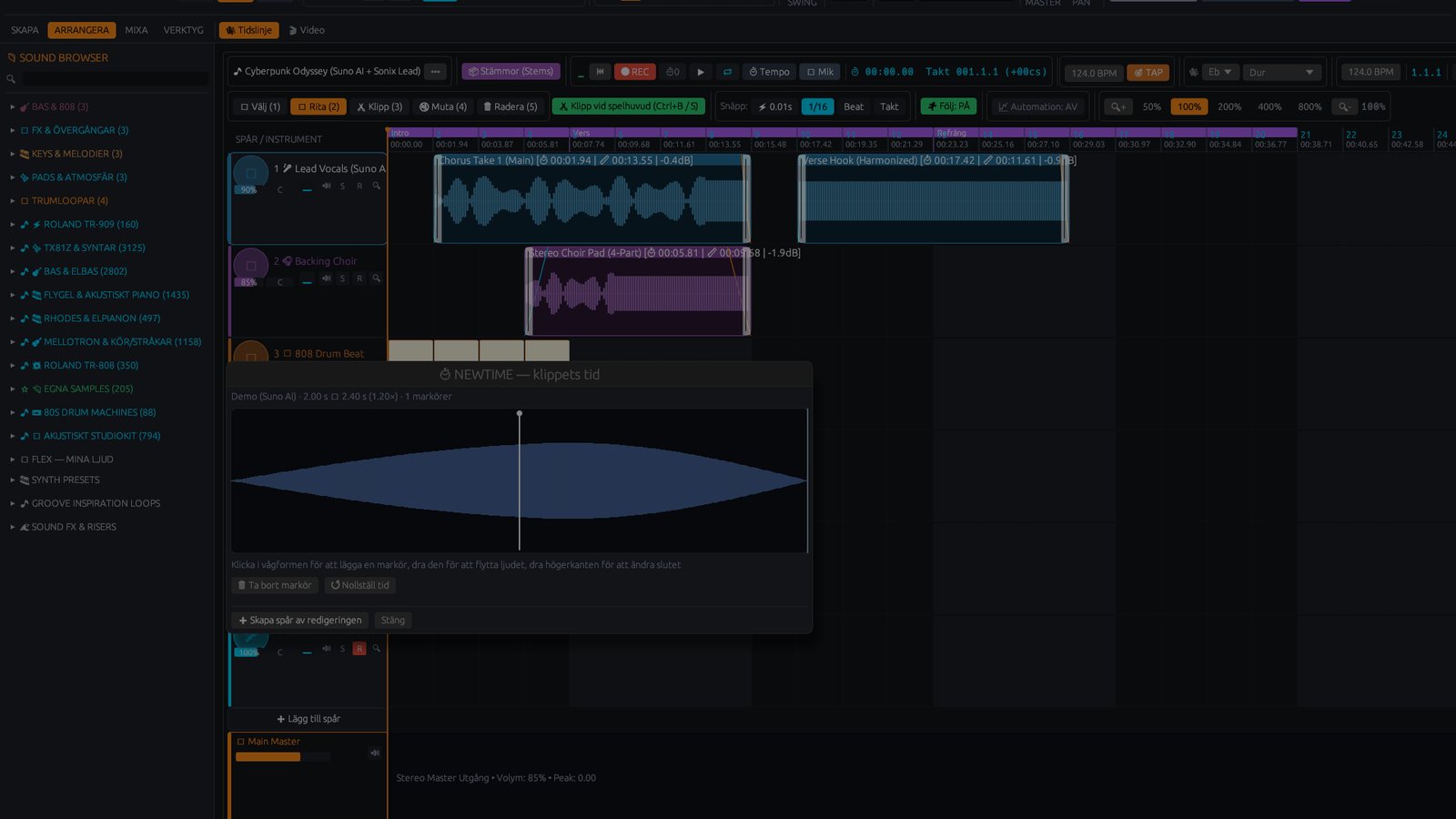
Newtime, the time editor
Newtime: markers that move where the sound lands, with the pitch kept.
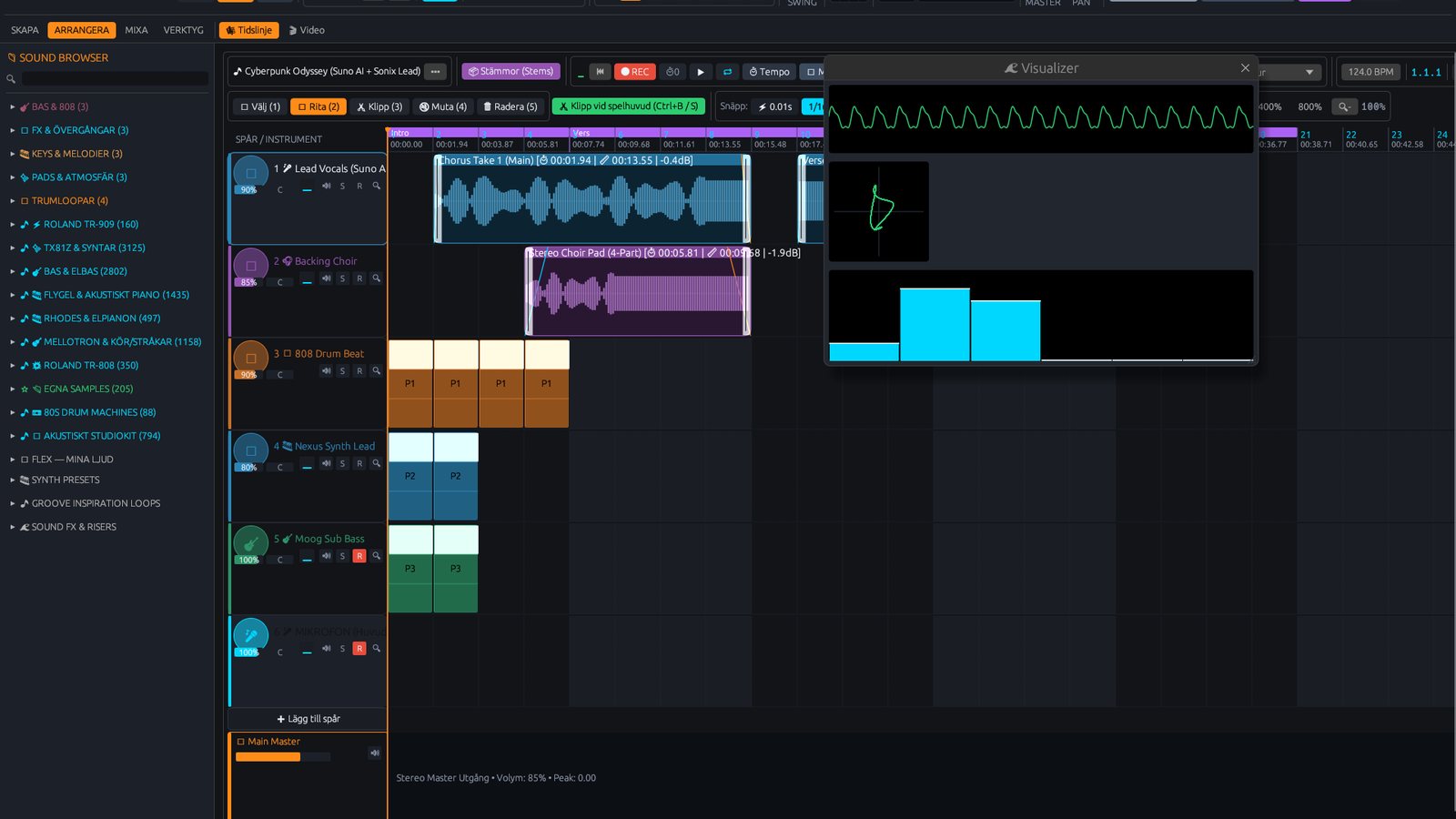
The visualizer
Visualizer: oscilloscope, spectrum and a goniometer for the stereo image.
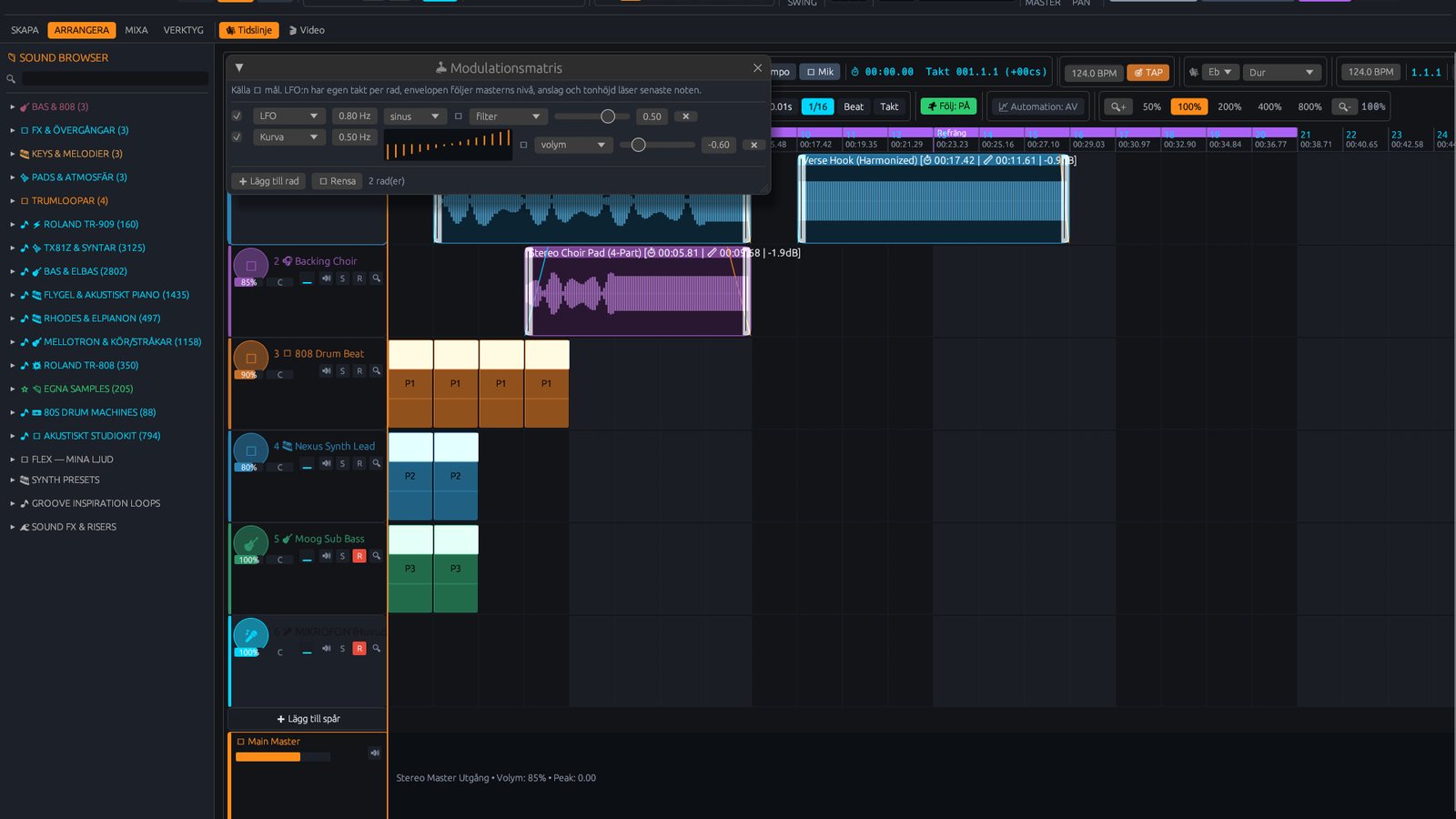
The modulation matrix
Modulation matrix with a drawn 16-point curve as a source.
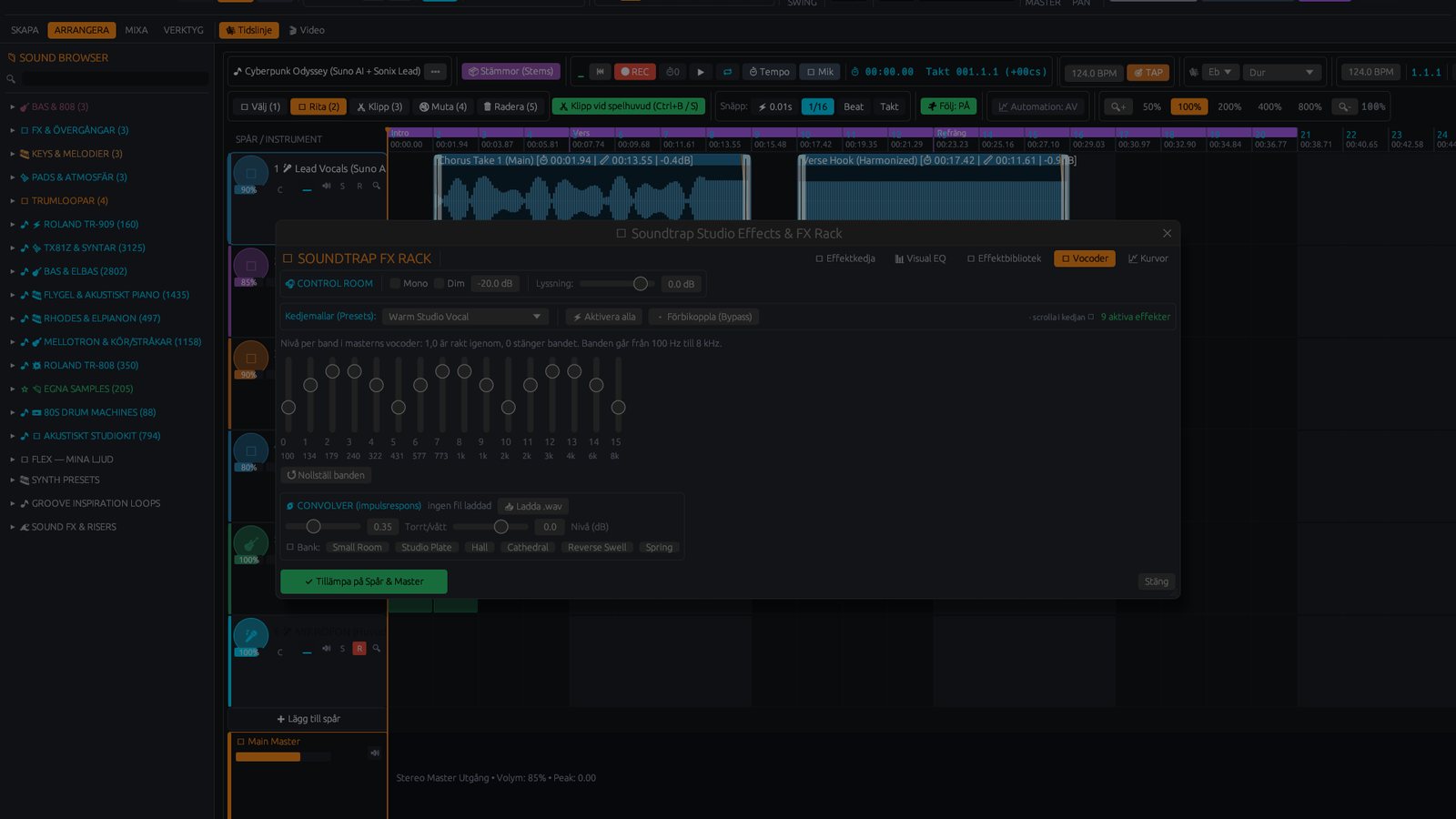
The vocoder band editor
Vocoder: sixteen bands from 100 Hz to 8 kHz, each with its own level.
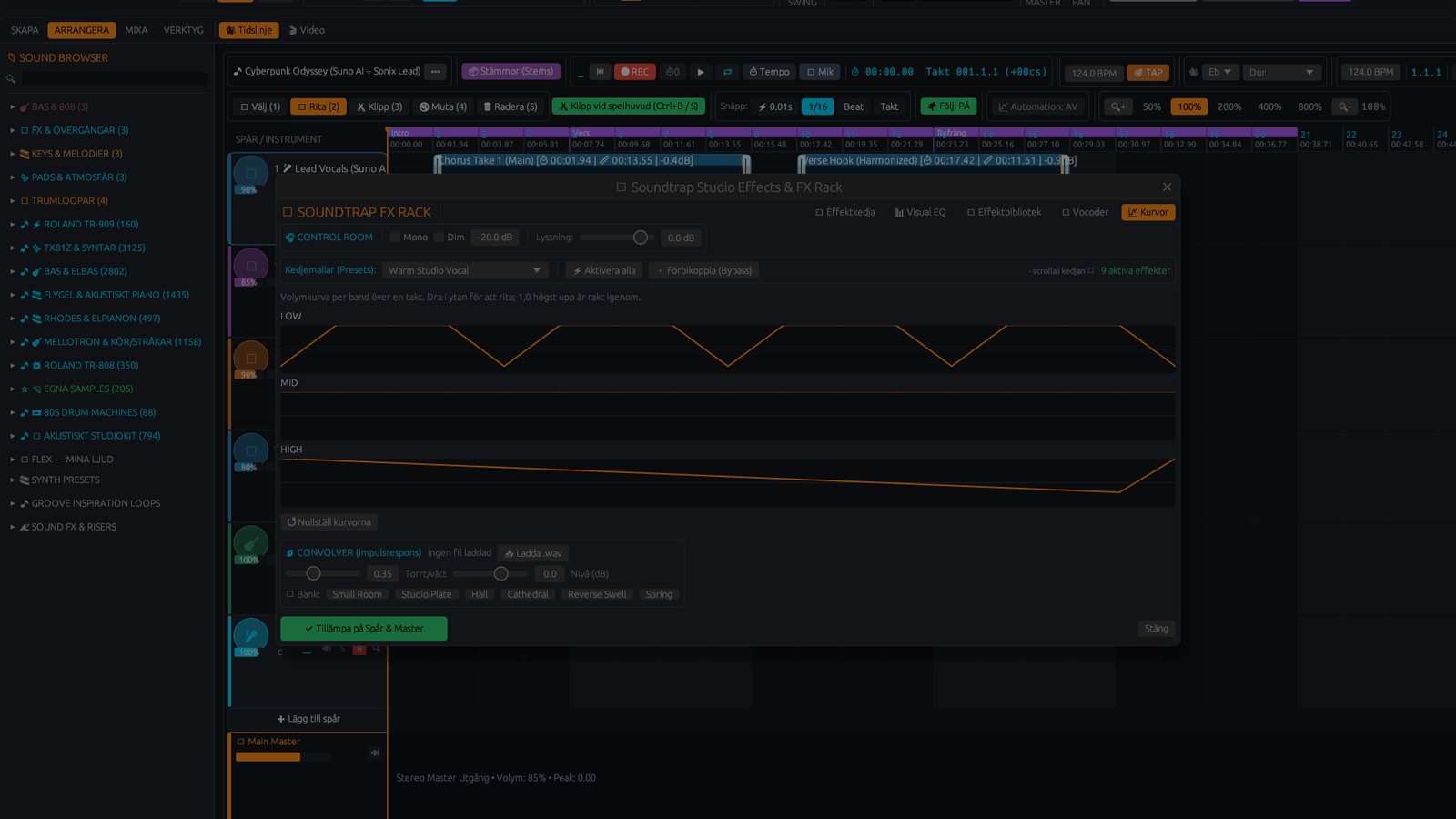
Maximus band curves
Maximus: a drawable volume curve per band, one bar long and in the song tempo.
04 / What is missing

This is not finished yet.

It is an early release, and you may as well know the limits before you download it.

  • VST3, VST2 and CLAP load and play only in a build with --features plugin-host. LV2 exists only in the catalogue, and plugin windows need a real X server.
  • The modular patcher evaluates nodes in topological order, so cables may be drawn in any order; a cycle is reported instead of hanging.
  • Neural stem separation ships without model weights. The model is downloaded separately and needs a licence that suits you.
  • No Suno integration. The Suno import reads exported stem packs and uses the local generator.
  • There is no video. The scripting API covers the piano roll and the project (Rhai), but not samples beyond header info.

The full list is in the README, the plan in the ROADMAP.

1063automated tests
0warnings in all four builds
38screenshots in the repo
7interface languages
618commits